Why Do Water Heaters Leak in Las Vegas?
October 18, 2026 · 10 min read
On this page
We sort water heater leaks into four causes. A pipe connection works loose, the drain valve stops sealing, the relief valve lets water out, or the tank itself rusts or cracks. A. O. Smith, a water heater maker, says hard water can lead to that last one over time. So we start with what Las Vegas water can do inside a tank.
Maybe you found rusty water in the drain pan, or a puddle creeping across the garage floor. Below, we rank the causes from minor to serious. Then we show how to tell where the water is coming from, and what to shut off first.
A plumber handles the heater. We handle the water it leaves behind, with water damage restoration that starts with an assessment of how far the water spread.
Does Las Vegas Hard Water Make Water Heaters Leak?
It can, over time. The Las Vegas Valley Water District’s water quality FAQ rates the district’s water “very hard,” the kind that can leave a chalky build-up on fixtures. It names the minerals behind that rating: calcium and magnesium, carried into Lake Mead from the Colorado River. You have probably seen the build-up on a faucet or a shower head.
That rating describes the water, not what it does to a tank. For that, we turn to A. O. Smith. A. O. Smith’s leak guide says hard-water minerals can collect at the bottom of the tank and cause overheating, cracks and leaks. The guide adds that as that sediment is heated and reheated, it can weaken the metal until it cracks and leaks. So by A. O. Smith’s account, hard water can cause leaks slowly, not suddenly, starting at the bottom of the tank.
It works a lot like the scale in a kettle. Heat the same hard water over and over, and the minerals pile up on the bottom. A tank water heater keeps reheating the water it holds, so the layer on the bottom grows over time.
The sediment can make itself heard before any water shows. A. O. Smith’s guide says rumbling or popping, up to loud cracking, usually means sediment has built up in the bottom of the tank. Rusty or cloudy hot water, or a metallic smell, can also point to sediment or corrosion inside the tank.
For example, say your heater has started to rumble when it heats. That is a good reason to get a plumber’s take on flushing the tank, because flushing is how sediment gets out. In water as hard as ours, it is also worth asking how often yours needs it.
In A. O. Smith’s guide, sediment is one cause among several. In our list below, it sits at the serious end.
What Causes a Water Heater to Leak in Las Vegas?
We’ve ranked these from minor to serious, going by how A. O. Smith’s leak guide describes each one. The first two sit close together, because both are simple parts that wear or work loose.
- A loose pipe connection. Cold water comes in through the inlet and hot water leaves through the outlet, and each pipe joins the heater at a connection. Those connections can work loose over time, from thermal expansion as the metal heats and cools, and from ordinary wear and tear. The water comes from a joint, not from the tank, which is why this one starts the list.
- A drain valve that won’t seal. Near the bottom of the tank is the drain valve, the spigot used to drain or flush it. It can leak when it works loose or fails. It is still a part on the outside of the tank, but its drip lands at the base, where it can pass for something worse.
- The temperature and pressure relief valve. This safety valve, the T&P valve for short, lets water out when the temperature or pressure inside the tank climbs too high. A. O. Smith says leaks from it are often caused by excessive temperature or pressure. So the drip can be a symptom of a problem in the system, not just a worn valve. Excessive water pressure can also stress the heater into leaking at the tank or its connections. That is why this one ranks above the first two.
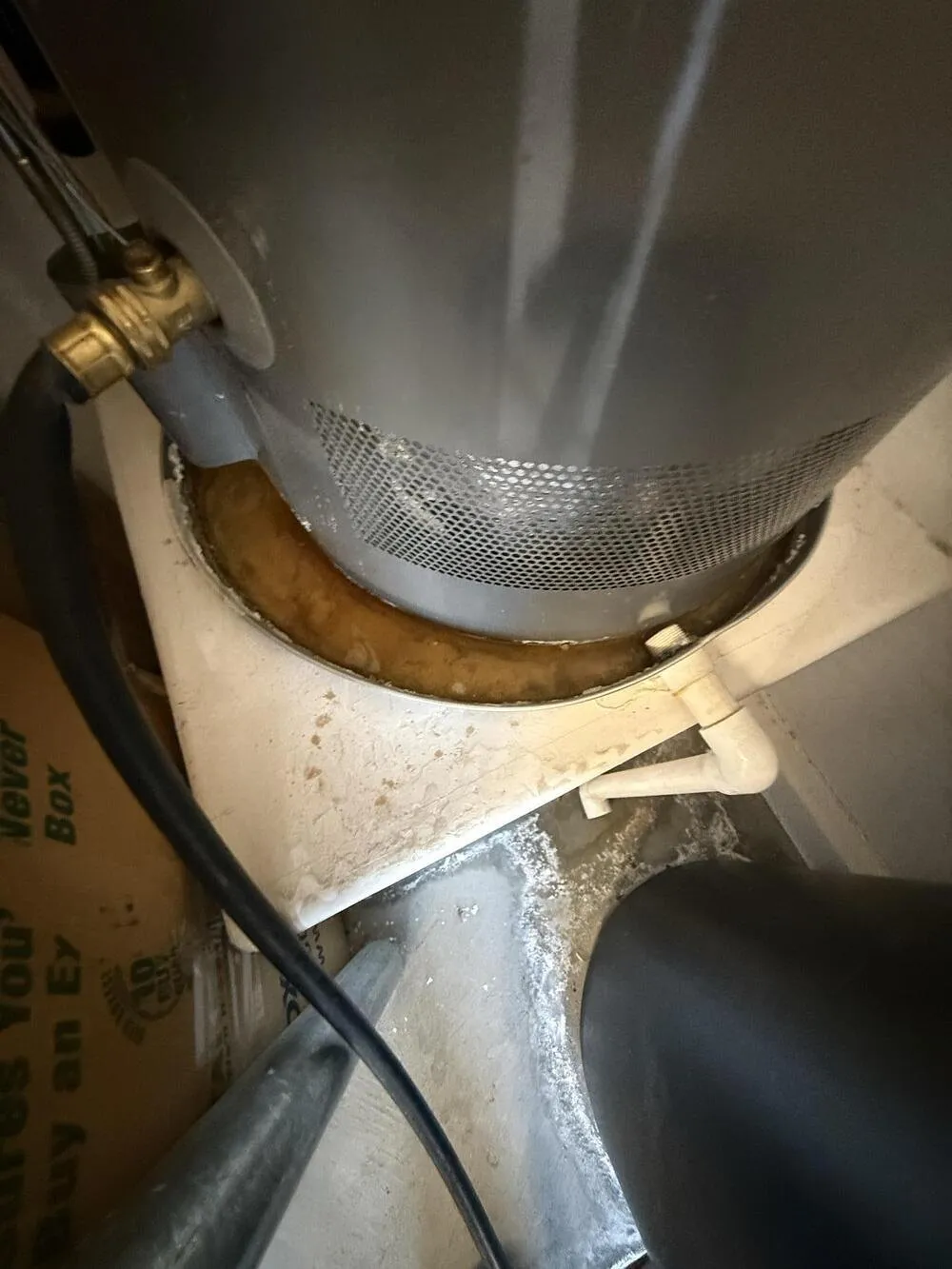
- A tank that has corroded or cracked. This is the serious end. Inside the tank, a metal rod called the anode rod corrodes over time to protect the tank from rusting. Once the rod is used up, the tank loses that protection. In Las Vegas, this is also where, as A. O. Smith describes, the hard-water sediment from the section above can do its damage. Tanks can also crack, from corrosion or from the stress of water pressure, and leaks can start as an old heater’s parts wear out. A. O. Smith’s guide calls a corroded tank a serious internal problem. It says a leak from the base is often the first indication of a serious problem.
For example, say you find water at the base of the tank. The hot water at your kitchen tap has also started coming out rusty, one of the signs from the section above. Both point inside the tank, which makes number 4 the likely answer.
For your floors and walls, though, the cause matters less than how long the water has been running and where it went. A slow drip from a loose fitting can still soak a platform or the bottom of a wall if nobody notices it. Which fix a leak needs, a new part or a new heater, is the plumber’s call. Our part starts where the water lands.
Where Is My Water Heater Leaking From in My Las Vegas Garage?
If yours is in the garage, where the water starts helps you narrow down which cause from the list you have. One safety note before you get close. If you smell rotten eggs or hear hissing near a gas heater, don’t go near it: leave, and use the gas-leak steps in the next section. Otherwise, A. O. Smith’s leak guide says the power or gas to the heater should be off before any inspection. The next section covers how, so shut the heater down there first, then come back here to trace the leak.
Rule out condensation first. A. O. Smith’s guide says condensation is often mistaken for a leak. On a gas heater, it can form when cold water enters the tank or the burner fires after sitting idle. It is typically temporary. On an electric heater, the insulation around the tank generally keeps it out of sight. So water that shows up right after the tank refills and then dries is likely condensation. Water that keeps coming back points to a leak.
Water can run down the outside of the tank before it pools, so follow the wet streak up to where it starts:
- At the top: the pipe connections, number 1 on the list.
- On the side: often the T&P valve, number 3. Water from the discharge pipe that runs down the side from that valve means the valve is letting water out.
- At the base: the drain valve or the tank, numbers 2 and 4, a simple part or the serious end of the list.
A T&P leak may not reach the garage floor at all. The City of Las Vegas handout on residential water heater installs has a rule for that discharge pipe. It says the pipe must run to the outside of the home, or through an air gap into the drainage system. So that water can end up outside or down a drain. The handout covers homes in the City of Las Vegas. Henderson and unincorporated Clark County have their own building departments.
The hard water helps here. A slow drip at a fitting can dry before it ever puddles, and it can leave behind the same chalky build-up from the first section. That build-up on a fitting or valve is worth a closer look.
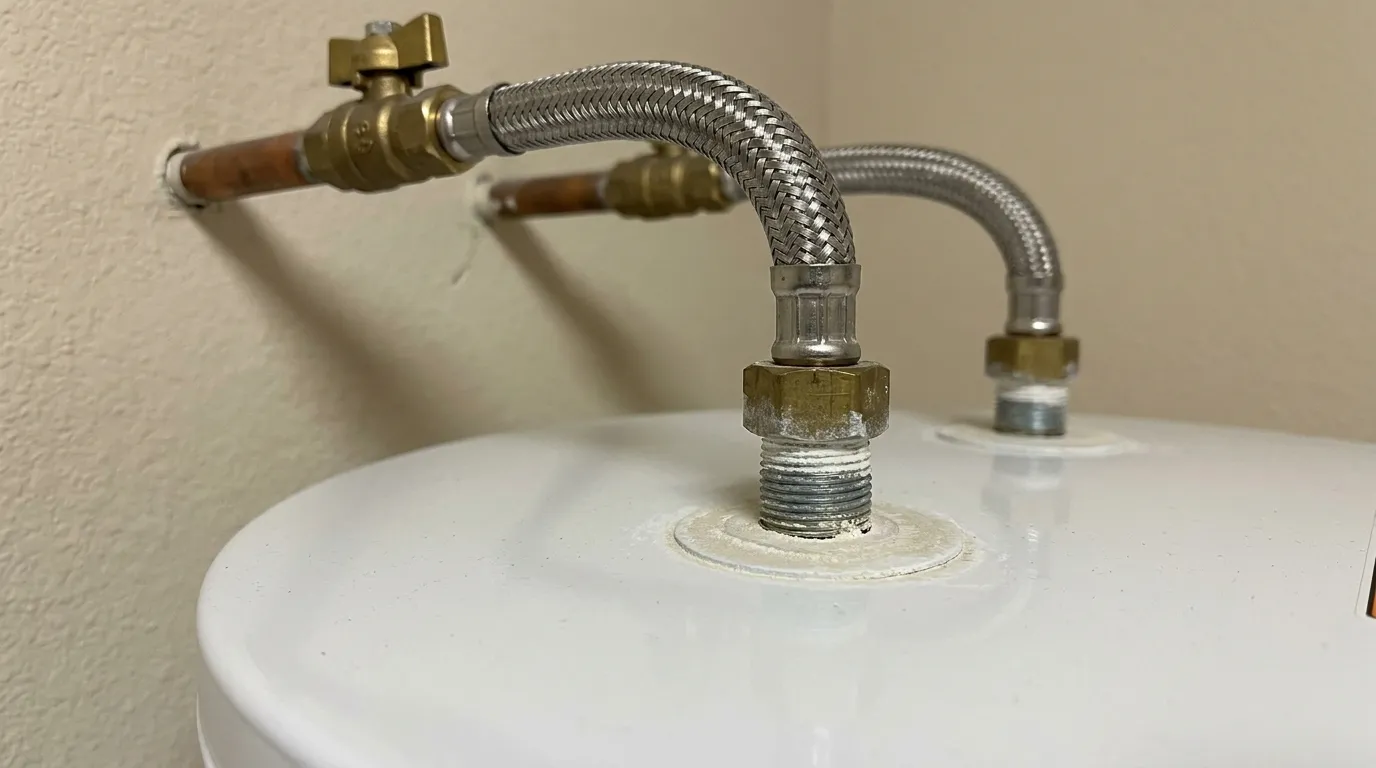
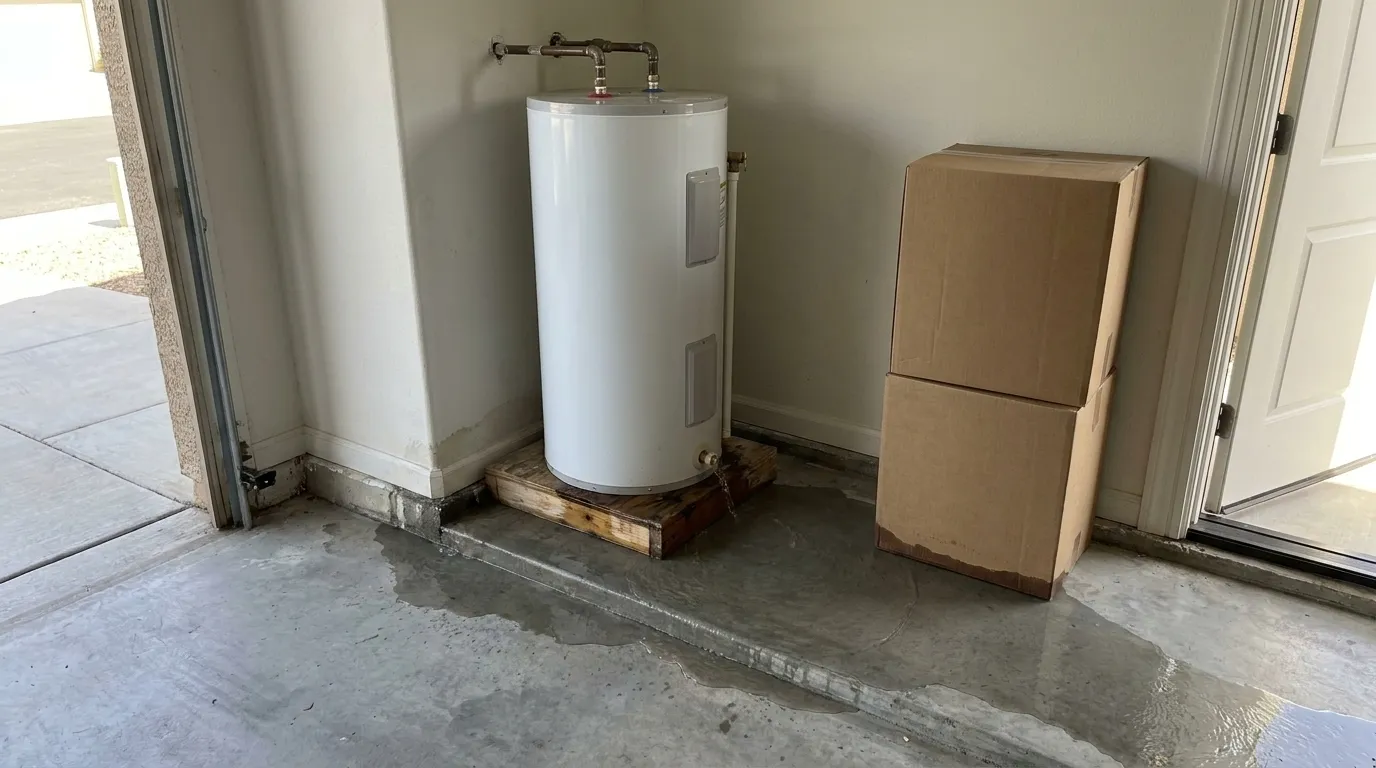
Then there’s where the water goes. The City of Las Vegas handout calls for a drain pan when the heater is installed anywhere other than the first level of the home. The pan must be piped to a drain or outdoors. The handout also says it is a summary and does not contain every code requirement. If yours is in a ground-level garage, that line does not call for a pan. Without one, a leak runs straight onto the slab.
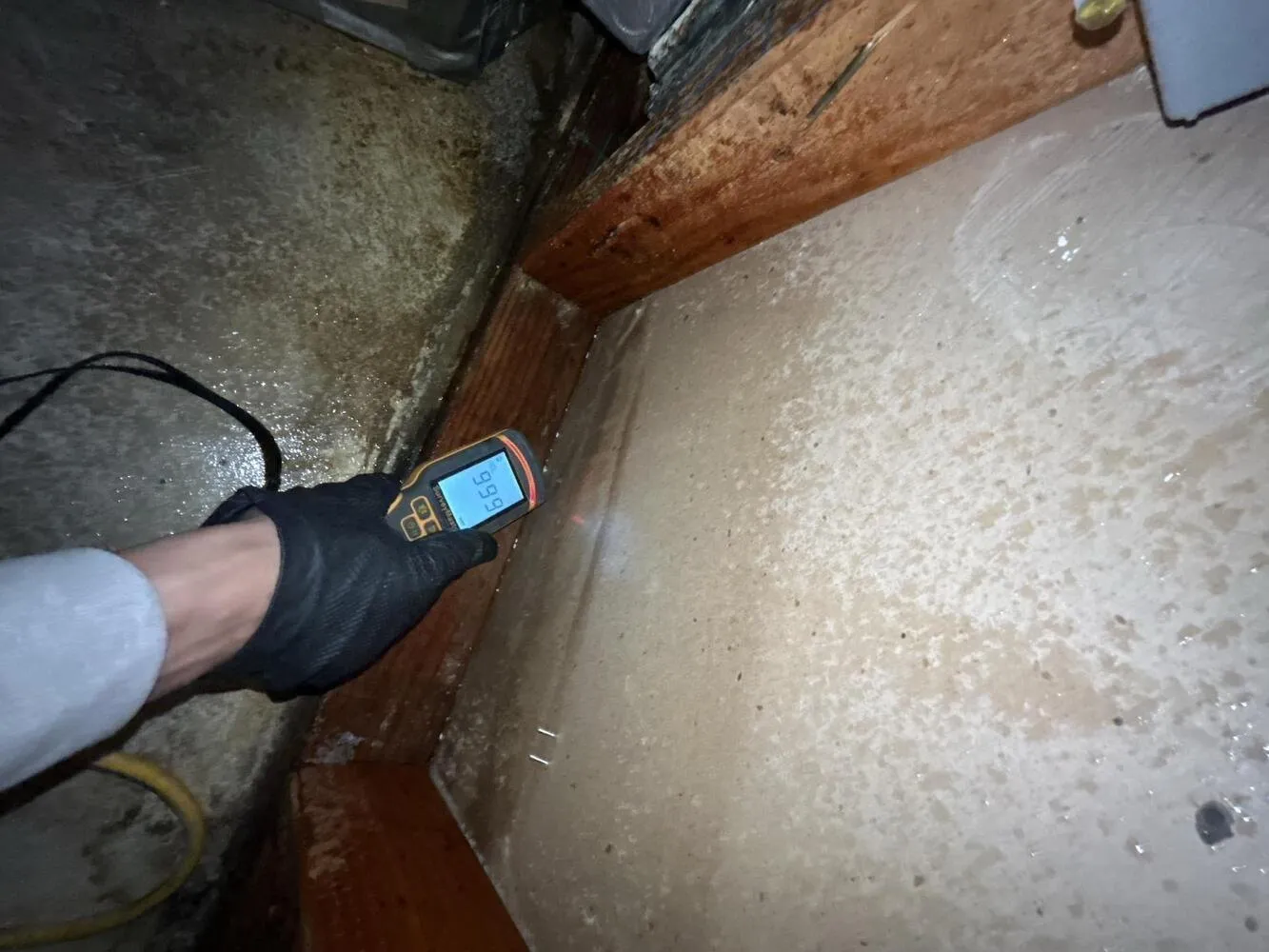
Say your heater stands on a wood platform in the garage with no pan under it. A slow leak at the base soaks the platform first. Then it spreads across the slab to the boxes beside it and the bottom of the drywall.
Is a Leaking Water Heater an Emergency for Las Vegas Homeowners?
Yes, treat it as one. A. O. Smith’s leak guide says a leaking water heater should be treated as urgent and needs immediate action. Even minor leaks can quickly cause significant water damage and mold problems.
First, one check. If you smell rotten eggs, even faintly, or hear hissing near a gas heater, skip the shutoff steps below. Southwest Gas, which serves the Las Vegas area, gives these steps for a suspected gas leak:
- Leave the area or building right away, tell others to leave, and leave the doors open.
- From a safe place, call 911 and Southwest Gas.
- Don’t smoke or use matches or lighters.
- Don’t turn any switch, thermostat or appliance control on or off, or do anything that could cause a spark.
- Don’t start or stop an engine or use an automatic garage door.
With no gas smell or hissing, shut the heater down in the order A. O. Smith’s leak guide gives, before anyone attempts a fix:
- Turn off the energy. If you would have to step in water to reach the panel or the valve, don’t. For the panel, call an electrician to turn the power off. The CDC says never to turn power on or off while standing in water. If you can reach them without stepping in water, go ahead. On an electric heater, switch off its breaker at your home’s electric panel. On a gas heater, close the gas shutoff valve near the heater, if you are confident doing so.
- Turn off the water supply. If you can reach the dedicated shutoff valve on the cold-water line leading to the heater without stepping in water, close it. If you would have to step in water, don’t.
Can you still shower? Not with that heater. A. O. Smith’s answer is that you should not keep using a leaking water heater. Leave its power and water off until a professional has diagnosed and fixed the problem. The valve you closed is the heater’s own, so the rest of the house should still have cold water.
If that valve won’t turn, or you would have to step in water to reach it, there is still the main shutoff, which stops water to the whole house. If you can reach it without stepping in water, close it. If you would have to step in water, don’t.
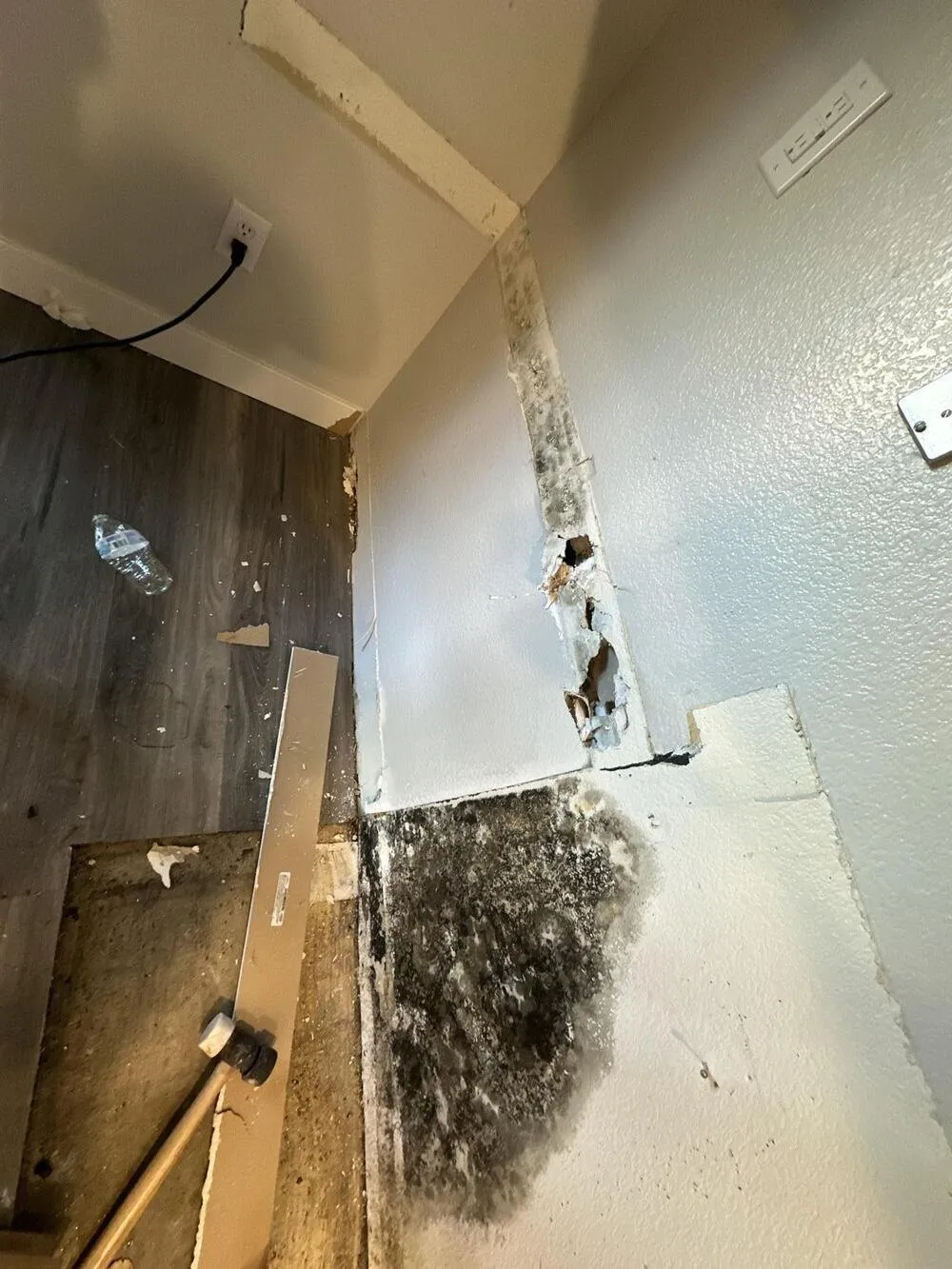
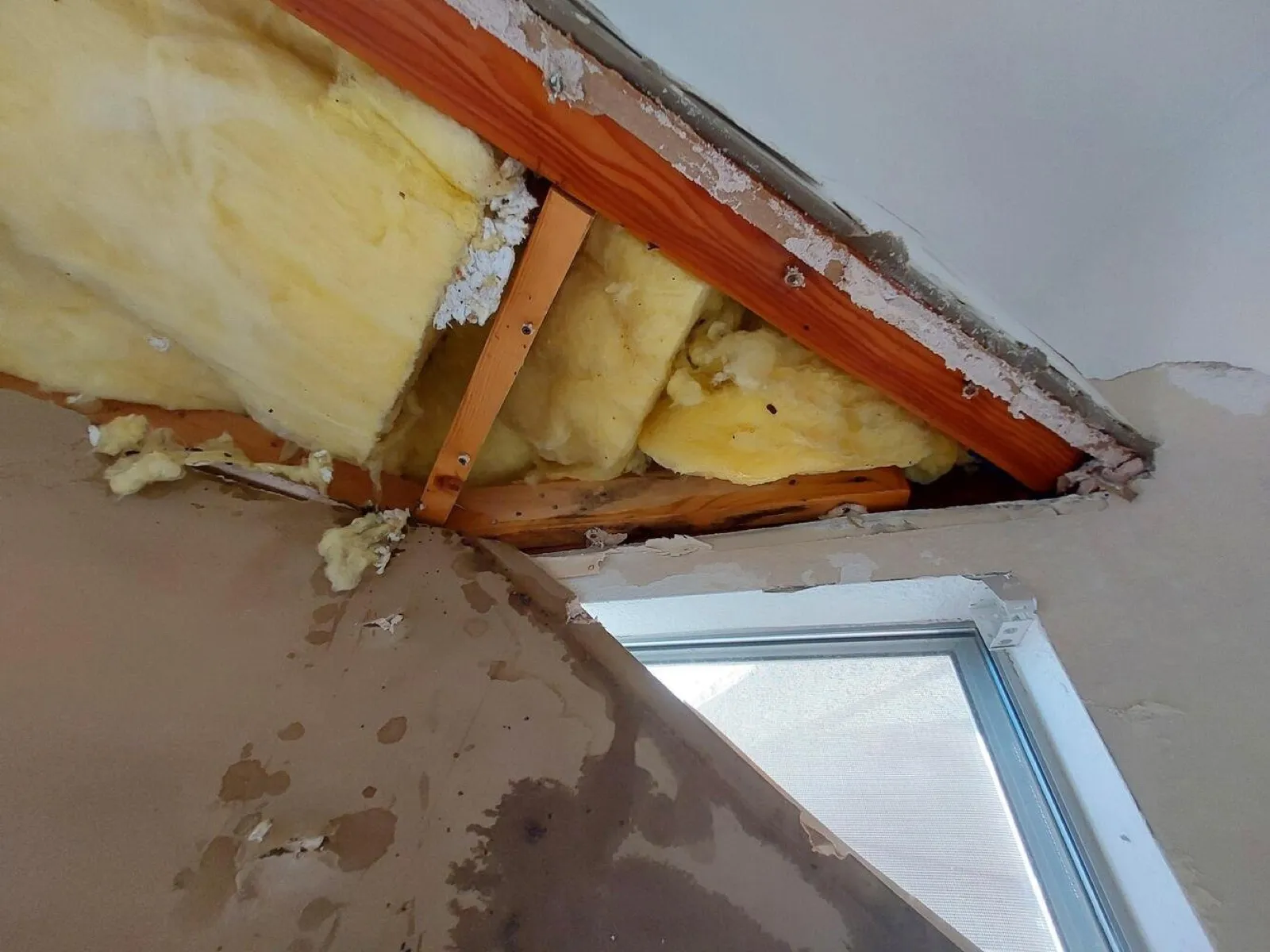
Shutting the heater down stops new water, but not the water already out. If yours is in the garage with no pan, that water may already be under the boxes and in the bottom of the drywall. That part is ours. We find the source of the water and how far it spread. We take moisture readings to find water you can’t see, and we pull up the standing water. Then we dry the area with air movers and dehumidifiers, and we remove wet materials, such as drywall and baseboards.
Say you find the leak late at night. We’re open 24/7, inspections and estimates are free, and we’re on site in under an hour. We serve the Las Vegas valley, including homes in Henderson. If the platform or drywall stayed wet for a while, a mold inspection is worth asking about too.
The Bottom Line on Water Heater Leaks in Las Vegas
Our list has four causes, from minor to serious: a loose pipe connection, the drain valve, the T&P valve and the tank itself. A. O. Smith describes hard-water sediment that can weaken a tank over time, and in Las Vegas that sediment sits at the serious end. If yours is in a ground-level garage, the City of Las Vegas handout, a summary of the code, does not call for a pan. Without one, a leak can run straight onto the slab.
Treat a leak as urgent. If you smell gas or hear hissing, leave and call 911 and Southwest Gas from a safe place. If not, follow the shutdown order above: the energy first, then the water. The plumber handles the heater, and we handle the water. We’re open 24/7, inspections and estimates are free, and we’re on site in under an hour.