How Long Does It Take for Mold to Grow in a Las Vegas Home?
October 18, 2026 · 9 min read
On this page
It comes down to how long things stay wet. The U.S. Environmental Protection Agency (EPA) says in its guide to mold and moisture that if wet materials are dried within 24 to 48 hours after a leak or spill, in most cases mold will not grow. Materials that stay wet longer than that can start to grow mold.
That window applies in Las Vegas like anywhere else. Our dry air helps with the water it can reach, but it does little for water that has soaked into a wall or settled under a cabinet, and that hidden water is where the trouble starts.
Below, we walk through the timeline after a leak, what makes mold grow faster in a Las Vegas home and where it shows up first. If you’re already looking at mold, our mold remediation in Las Vegas starts with a free inspection to find the source and the affected areas.
Can Mold Grow Fast in Dry Las Vegas Air?
Yes, wherever water gets trapped. Mold doesn’t need humid weather to get going. It needs a wet or damp surface. The EPA’s guide explains that mold spores float through outdoor and indoor air, and that mold may begin growing indoors when spores land on surfaces that are wet. So the spores are already in your house, desert or not, and water is what decides whether they grow. That’s also why water damage can lead to mold in a desert city.
A dry climate is less protection than it sounds. The dry air does help with water it can reach. A spill on tile or a wet countertop dries off with little help from you.
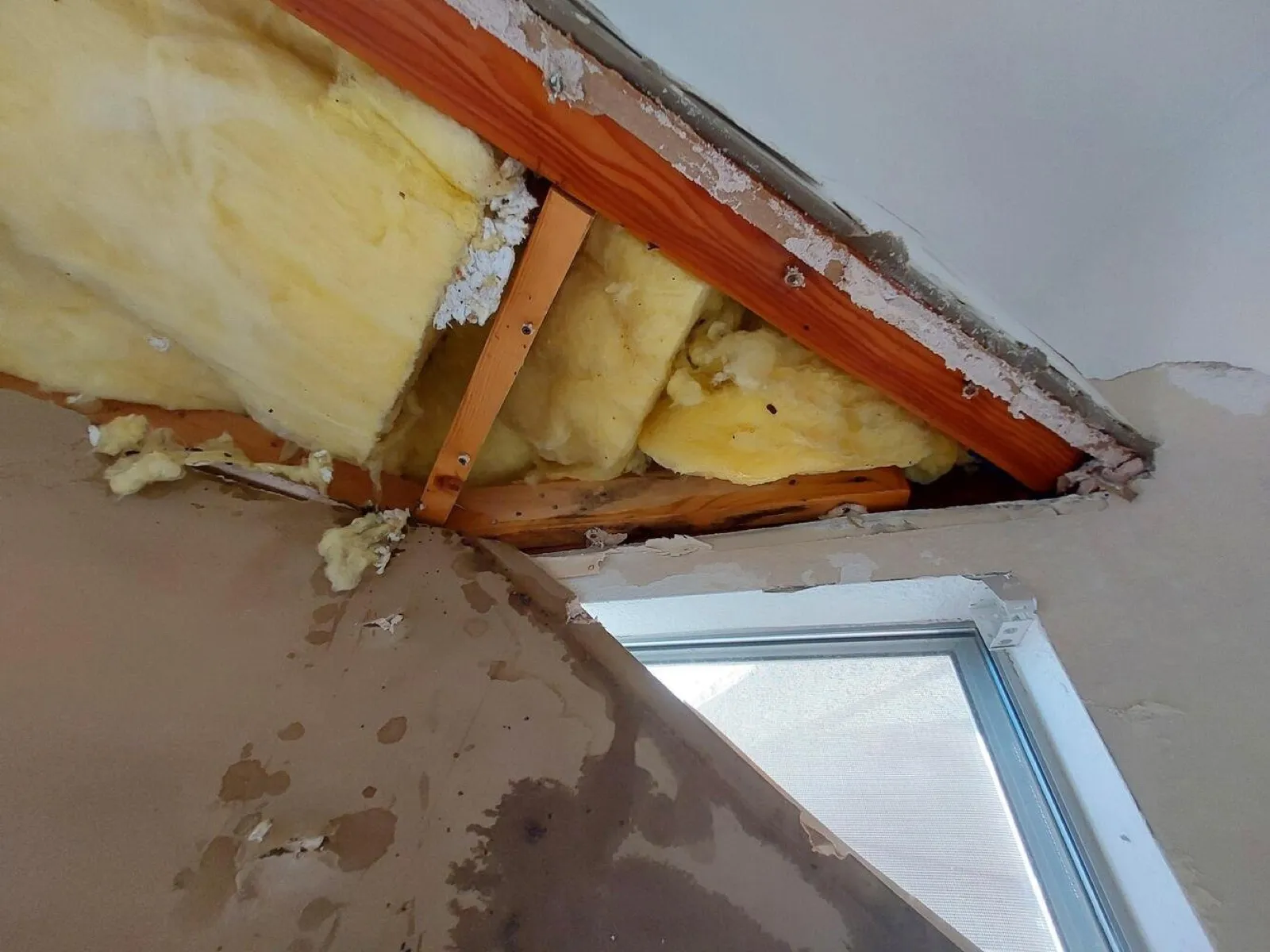
The water it can’t reach is the problem. Water that soaks into a material, or slips behind or beneath it, is largely closed off from the room air. The material can stay wet while the surface above it looks normal.
For example, say the supply line behind your toilet drips overnight. By morning the tile around the base looks fine, so it’s easy to wipe it once and forget about it. The water that ran under the baseboard is still sitting in the bottom of the drywall, out of sight, with very little air moving across it.
That’s the real catch with a dry climate. It clears away the water you’d notice and leaves the water you wouldn’t. A leak inside a Las Vegas wall gets no extra time from the weather outside, and it can give you fewer clues on the surface.
So in a Las Vegas home, don’t judge a leak by how fast the surface dries. Judge it by how long the water had to soak in and where it could have gone.
Indoor humidity is the other half of the picture, and here it changes with the season and with the way you cool the house. We get to both in the section on what makes mold grow faster.
How Fast Does Mold Grow After a Leak in Las Vegas?
Here’s the timeline in order, from the moment a leak starts to the point where you can see or smell mold. We’ll follow one leak through every stage. Say the supply line under your kitchen sink starts dripping into the cabinet on a weekday morning, after everyone has left for work and school.
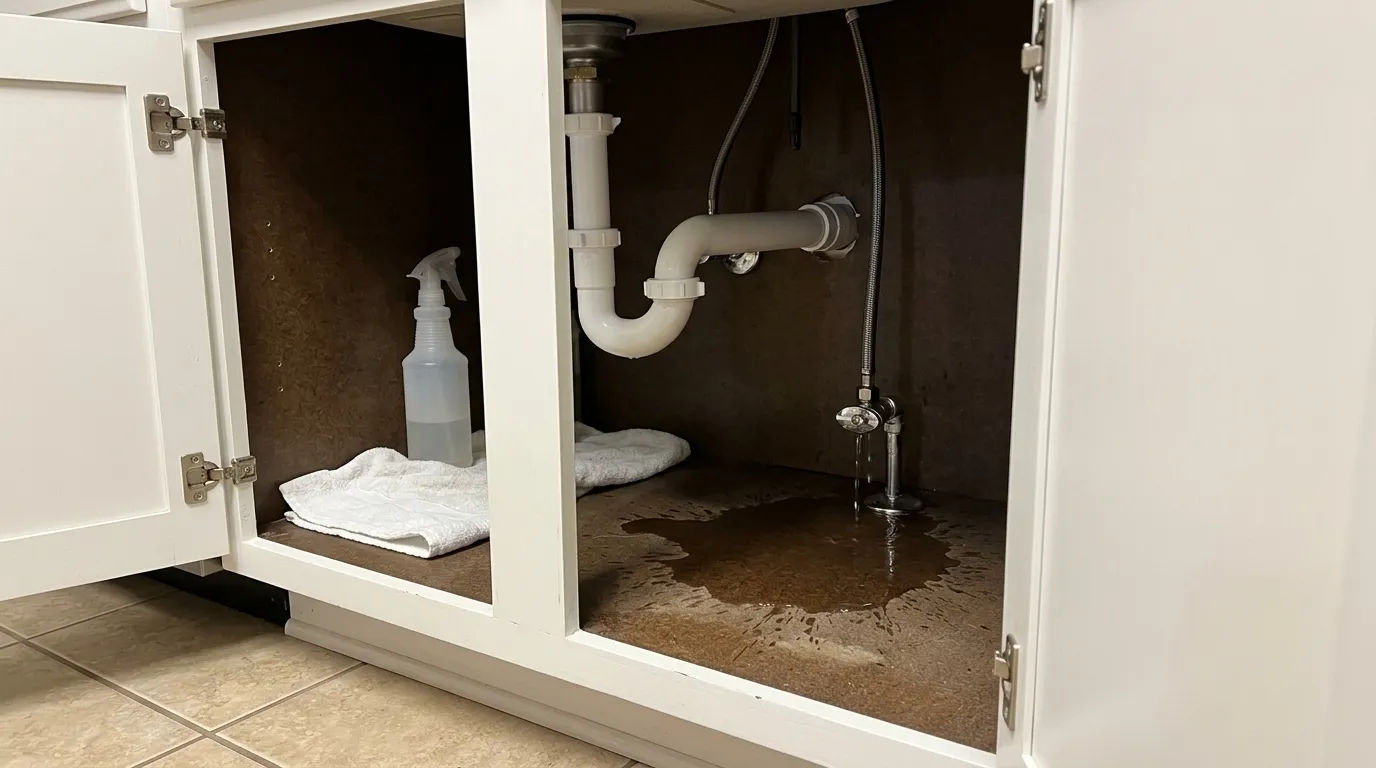
- The leak starts, and so does the clock. In the EPA’s guide, the 24 to 48 hours count from when the leak or spill happens, not from when you find it. So by the time you open that cabinet in the evening, part of the window is already gone. If a leak was hidden and you can’t tell when it started, treat the window as closed and have the wet areas checked. The first job is stopping the water, and fixing the line is the plumber’s work. We handle the water: we’re open 24/7, we’re on site in under an hour, and we find where the water came from and how far it spread.
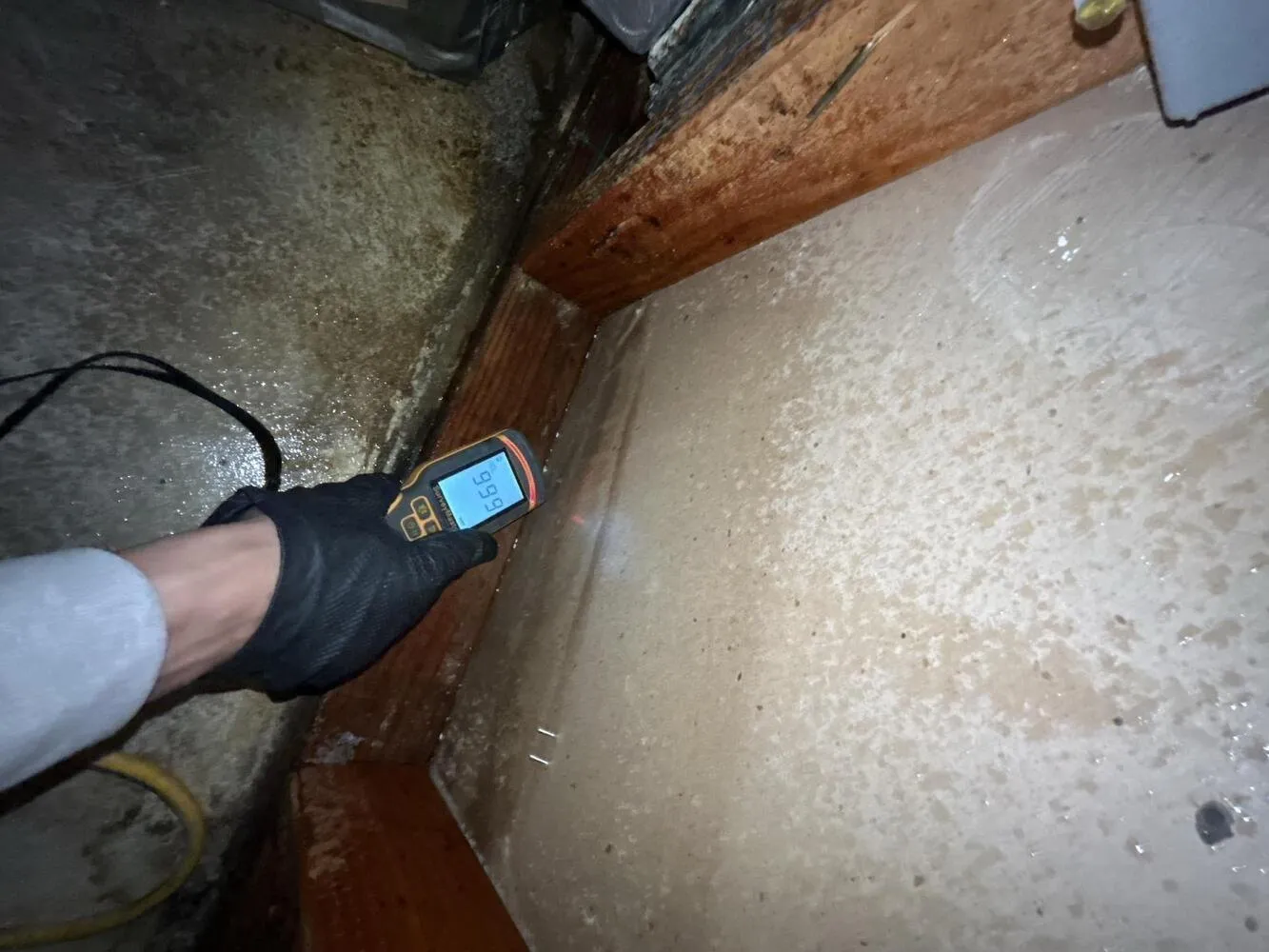
- Inside the window: dry what got wet, all the way through. This is the stretch that matters most. Dry means dry inside the materials, not just on the surface. In our example, that’s the cabinet floor and the drywall behind it, plus the toe kick (the recessed strip along the cabinet’s base) and the flooring in front of it if the water ran that far. We take moisture readings to find water you can’t see and to guide the drying. Then we dry with air movers and dehumidifiers, and we remove wet materials, such as drywall, insulation, carpet and baseboards. That’s how we dry out a home after a leak.
- Past the window: wet materials are at risk. Once the window has passed, the “in most cases” no longer covers you. That doesn’t mean mold shows up on a schedule. The EPA’s guide doesn’t put a day count on when growth turns visible, but it does say that mold damages what it grows on, and the longer it grows, the more damage it can cause. In our example, the risk now sits in the cabinet’s back panel and the bottom of the drywall behind the dishwasher, if either didn’t dry all the way. This is where a free inspection earns its keep.
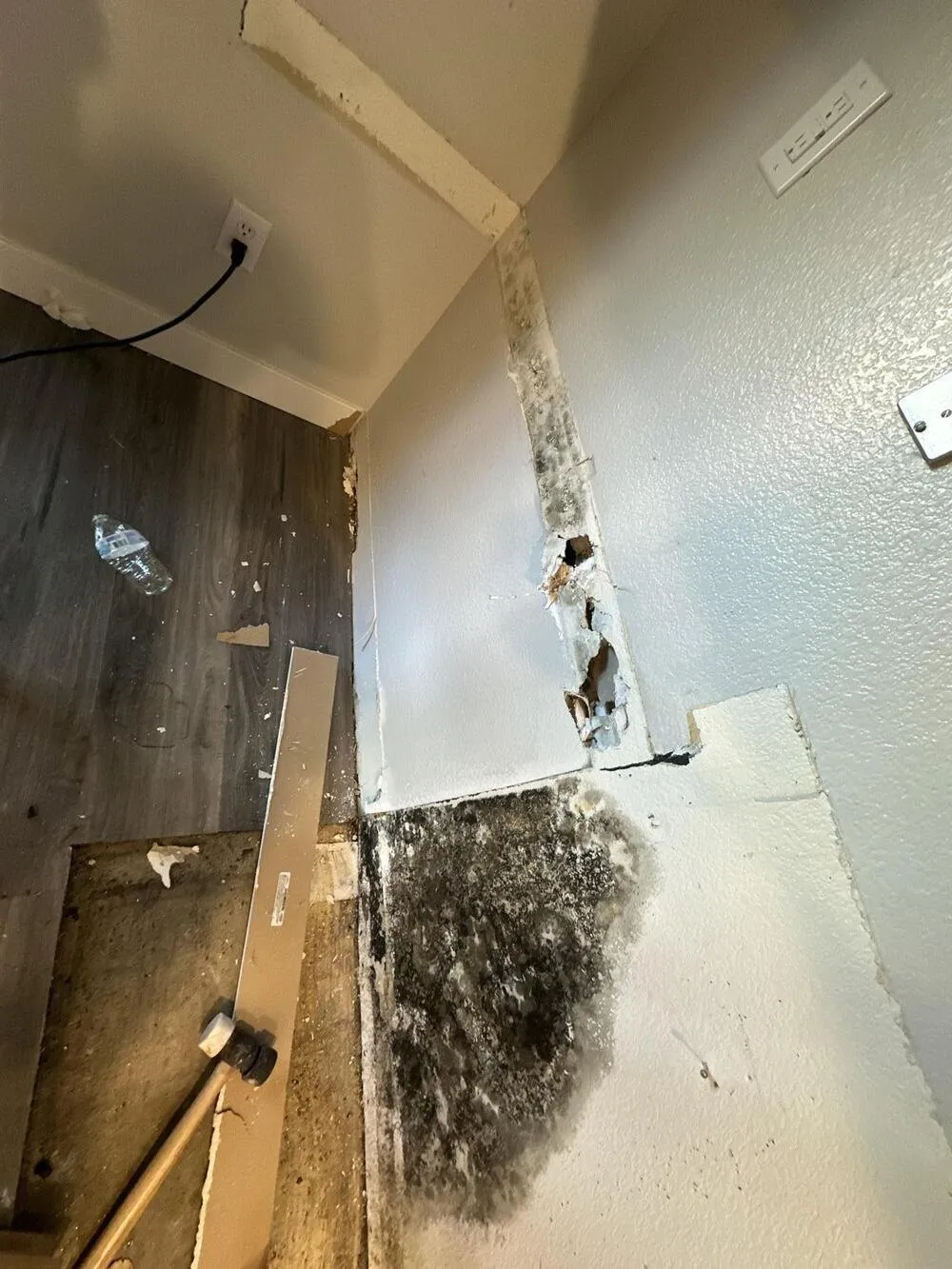
- When you can see it or smell it. Spots on the cabinet floor, or a musty smell when you open the door, are signs mold may already be growing. At that point the job is removal, not just drying. Our remediation sets up containment around the work area to keep dust and contamination from spreading, removes the wet and mold-contaminated materials and applies an antimicrobial treatment. While we work, we run air scrubbers and HEPA (high-efficiency particulate air) filtration to clean the air.
The lever is the same at every stage: the sooner the water is out of the materials, the less time mold has to work with.
What Makes Mold Grow Faster in My Las Vegas Home?
Anything that keeps materials wet longer, or keeps the air damp, works in mold’s favor. In a Las Vegas home, five things deserve your attention.
A leak that’s still running. A slow drip inside a wall or under a sink keeps rewetting the same material, so it doesn’t get the chance to dry inside the window. Finding the source comes first for that reason.
Indoor humidity. The EPA’s guide says to keep indoor humidity below 60 percent if possible, ideally between 30 and 50 percent. The Centers for Disease Control and Prevention (CDC) says on its mold page to go lower: keep humidity as low as you can, no higher than 50 percent, all day long, and an air conditioner or dehumidifier will help. A humidity meter from a hardware store gives you the reading, so you aren’t guessing.
The monsoon. The National Weather Service’s Las Vegas office says that typically in July and August, a push of moisture tied to the monsoon moves into the Mojave Desert and brings higher than average humidity. Wet materials get less help from the air in those weeks, so that’s when to watch the meter, especially after a leak.
Swamp coolers. An evaporative cooler cools the house by adding water to the air it blows inside. A 2022 review in the journal Indoor Air reports that this added moisture can raise indoor relative humidity 10 to 16 percent in single-family homes, in studies from Utah and Colorado rather than Las Vegas. If your home has one, the meter shows you what it’s doing to your indoor air. That matters more in monsoon weeks, when the outdoor air the cooler pulls through its pads is already more humid than usual.
The air conditioner. Does turning the AC off cause mold? Not by itself. Switching the AC off adds no moisture, and mold needs moisture to grow. But an air conditioner pulls moisture out of the air as it cools, so switching it off gives up one of the two tools named above.
One caution comes before you lean on the AC. If you know or suspect the heating and air conditioning system itself has mold in it, the EPA’s guide says not to run it, because it could spread mold throughout the building. The guide’s examples of when to suspect it are a system that’s part of an identified moisture problem and one with mold near its intake. Before taking further action, it says to read its guide on whether to have your air ducts cleaned.
If you have no reason to suspect the system, the meter tells you when to use it. For example, say you switch the AC off for a long weekend away in August. If the meter reads above those targets when you walk back in, leave the AC or a dehumidifier running the next time you go.
Where Does Mold Grow First After a Leak in Las Vegas Homes?
Mold starts where the water stays longest. Water runs down and soaks into whatever will hold it, so after a leak the wettest materials are often the low ones, out of sight and in the dark, with little air moving past them.
The EPA’s guide says you may suspect hidden mold if a house smells moldy but you can’t see the source. It lists places mold may be hiding, including:
- the back side of drywall, wallpaper or paneling
- the underside of carpets and pads
- inside walls around leaking or condensing pipes
- the surface of walls behind furniture, where condensation forms
- inside ductwork
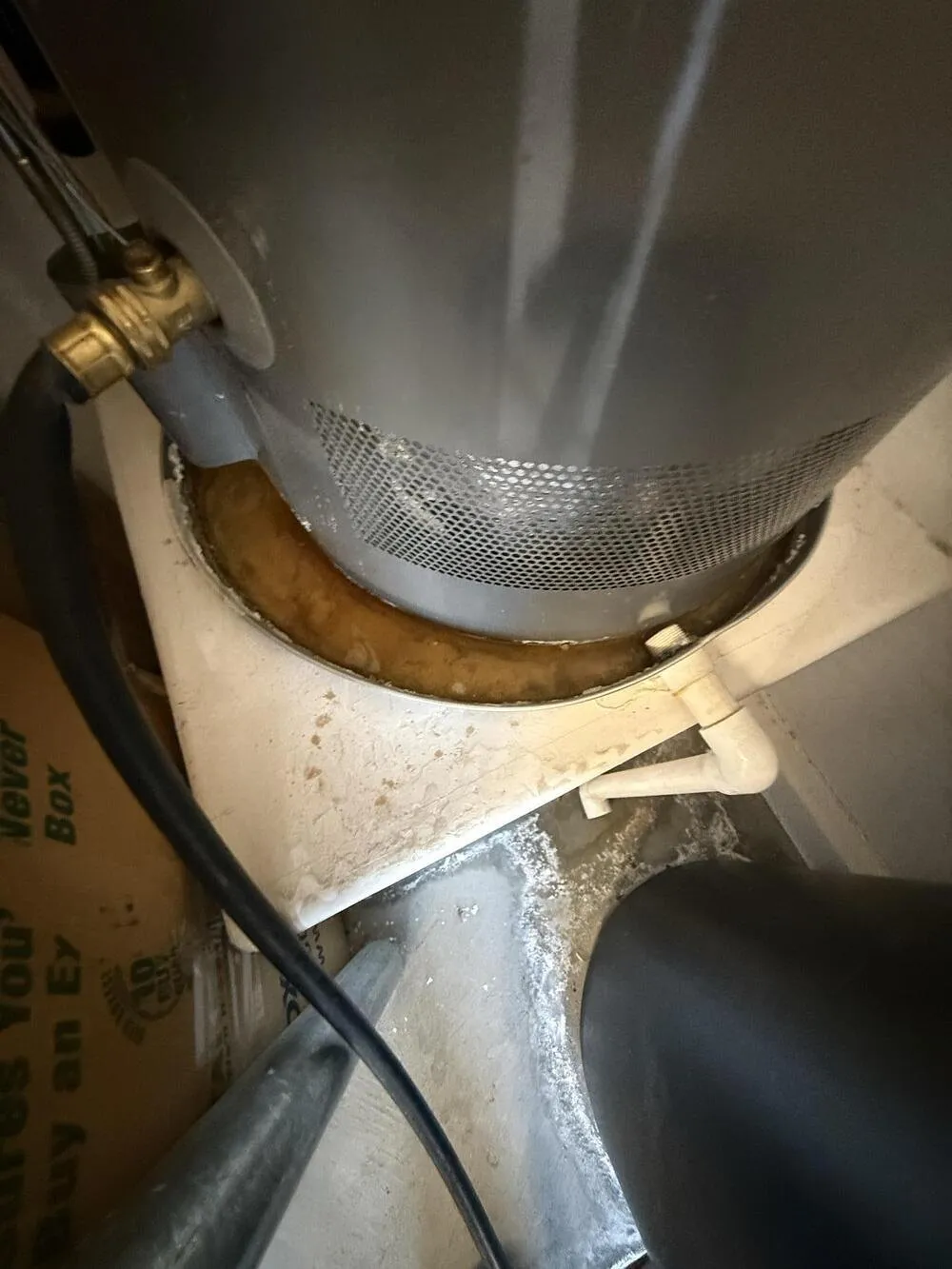
Two more spots are worth a look in a Las Vegas home, because both hold water by design: the drip pan and drain line under the indoor part of your air conditioner, and a swamp cooler’s pads and sump, if you have one.
For example, say the supply hose behind your washing machine starts leaking in a laundry room with a tile floor. Water runs along the tile behind the machine, under the baseboard and into the bottom of the drywall. If that wall backs onto a carpeted hallway, the pad on the other side can soak it up too. The tile in front of the machine may be the only wet spot you see, while the bottom of the wall behind the machine is where mold gets its start if that water stays.
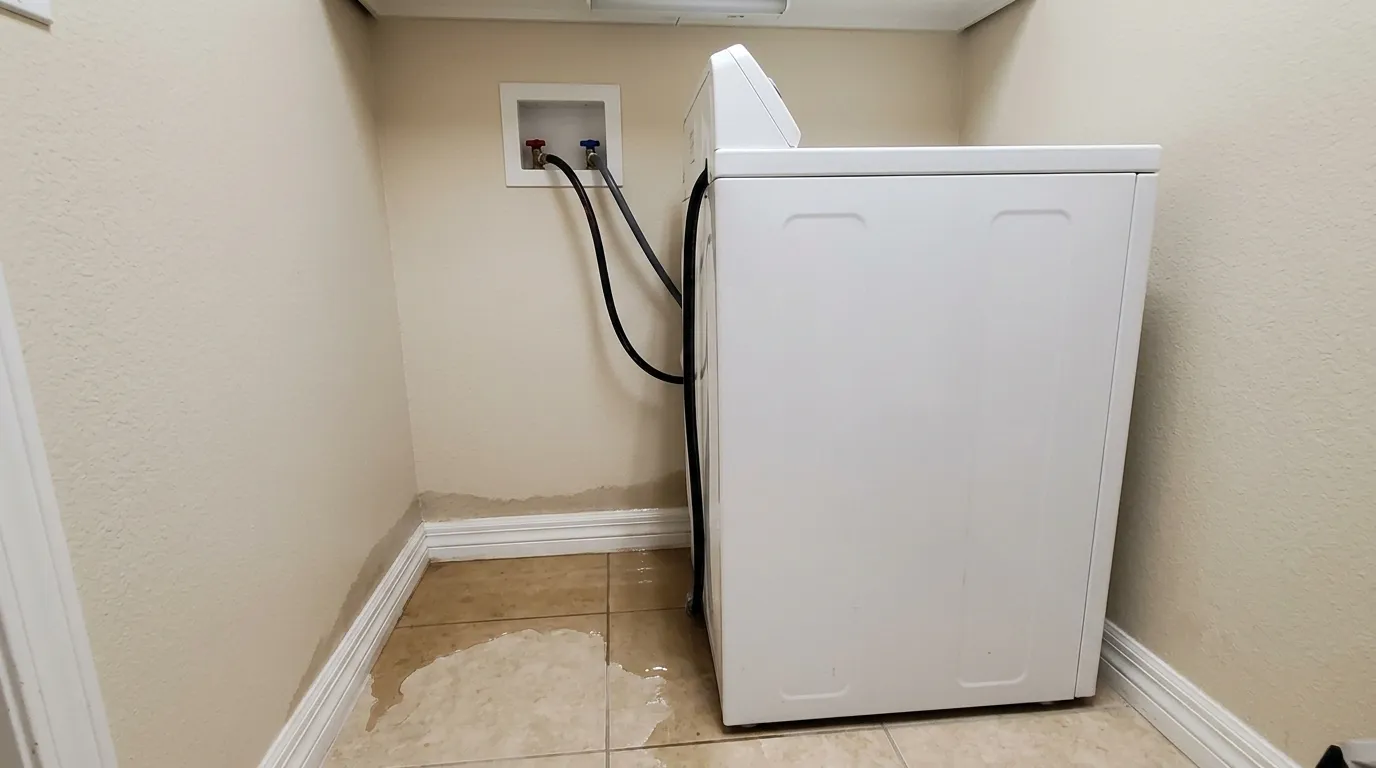
It’s tempting to pull off baseboards or peel back wallpaper to look, but hold off. The EPA’s guide warns that removing wallpaper with mold on its underside can lead to a massive release of spores. If you believe you may have hidden mold, it suggests hiring an experienced professional. If anyone at home has health concerns about mold, ask your doctor.
That’s what a free inspection that tracks down hidden moisture is for. We take moisture readings to find water you can’t see, find the source and the affected areas, and walk you through what we found.
The Bottom Line on Mold Growth in Las Vegas
Mold growth comes down to water and time, and the dry Las Vegas air only helps with the water it can reach. Wet materials dried inside the EPA’s 24 to 48 hour window will, in most cases, not grow mold, and that window starts when the leak does, not when you find it.
Past the window, the materials that stayed wet are the ones at risk, starting with the hidden ones low on a wall, under a cabinet or in carpet pad. Indoor humidity matters too, especially in monsoon weeks and in homes with swamp coolers, and a musty smell with no visible source is a reason to call.
We’re open 24/7 and on site in under an hour, and our inspections and estimates are free. Our answers to common water and mold questions cover what to do while you wait for us and what happens after an inspection.