What Causes Ceiling Water Damage in a Las Vegas Home?
October 18, 2026 · 10 min read
On this page
Ceiling water damage in a Las Vegas home comes from water above the ceiling. It can be a leaking water line or an upstairs fixture, or the drain line from your air conditioner (AC) backing up in the attic. It can also be a rooftop evaporative cooler that overflows, or a roof that lets in monsoon rain. The stain isn’t always right under the source, because water above a ceiling can run along the framing and soak the insulation before it shows.
Below, we explain why the damage spreads and rank the sources to check, from the closest to the farthest. Then we look at monsoon storms and at when a sagging ceiling is an emergency. A plumber, an HVAC (heating, ventilation and air conditioning) technician or a roofer fixes the source. The water it leaves is our part: our water damage restoration work finds where it went, takes out wet materials and dries the structure.
Why Does Ceiling Water Damage Spread in Las Vegas Homes?
Water that gets above a ceiling may not fall straight through. It can cling to the framing and run along it first. The U.S. Environmental Protection Agency (EPA) describes this in its Moisture Control Guidance for Building Design, Construction and Maintenance. It says water from rain or a plumbing leak may travel many feet along a floor joist or roof truss before it falls.
On the way, it soaks what it touches. Under an attic, that can mean the insulation lying on top of the drywall. Insulation can hold the water against the drywall, so the stain you see may be the last part of the damage to show up.
For example, say a monsoon storm finds a gap around a roof vent above your hallway. The water can run along a truss, soak the insulation over the bedroom next door and stain that ceiling instead. The hallway stays dry, and the bedroom looks like the problem.
In a two-story home, the same thing can happen between floors. Water from an upstairs bathroom can run along a floor joist, so the stain below may not sit under the tub. Either way, the stain marks where the water reached the drywall. It doesn’t show where the water got in, or how much insulation is wet above it.
Water can also run down the inside of a wall. So a leak above a ceiling can leave streaks on the wall below, or a stain around a window frame.
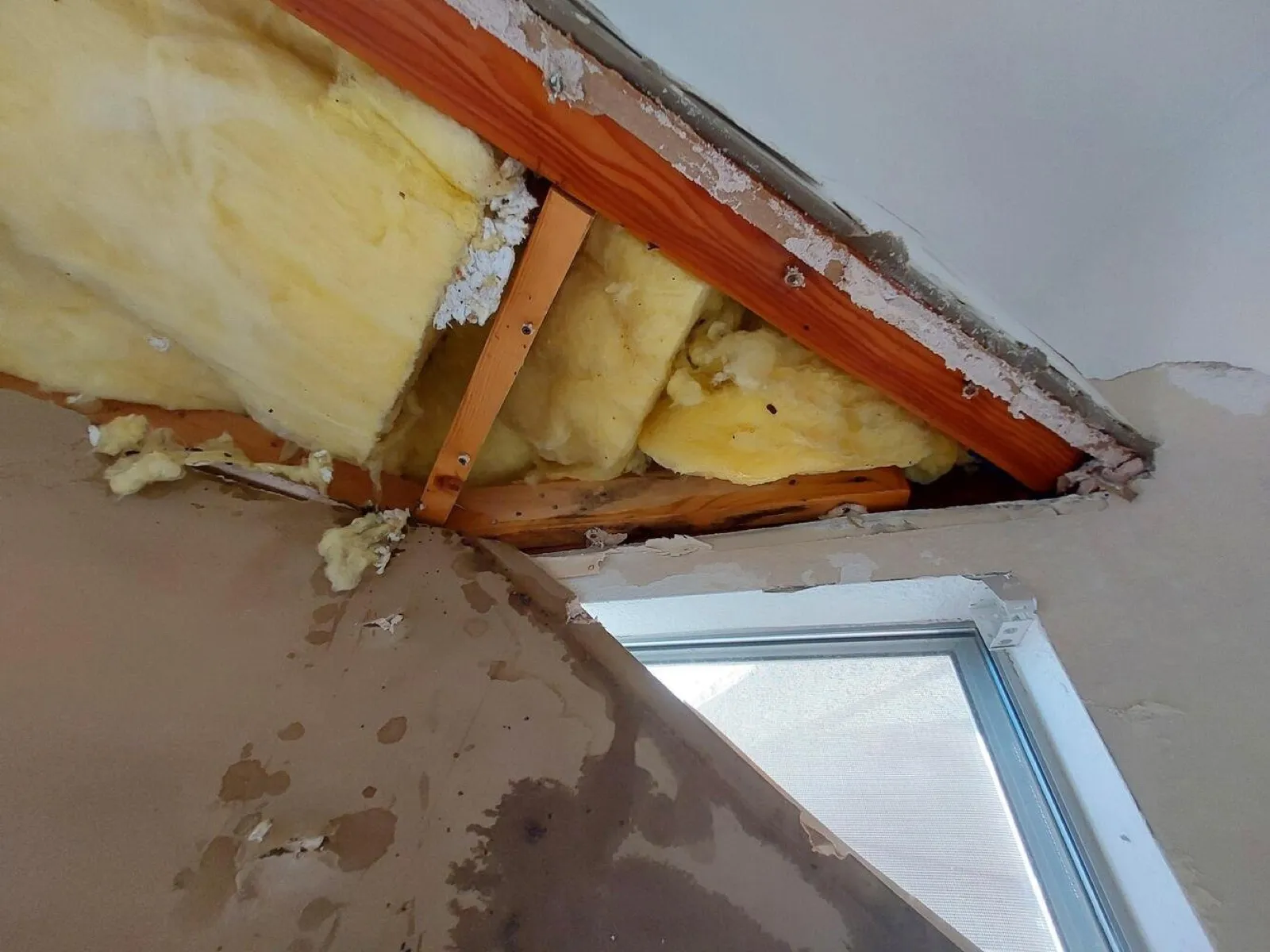
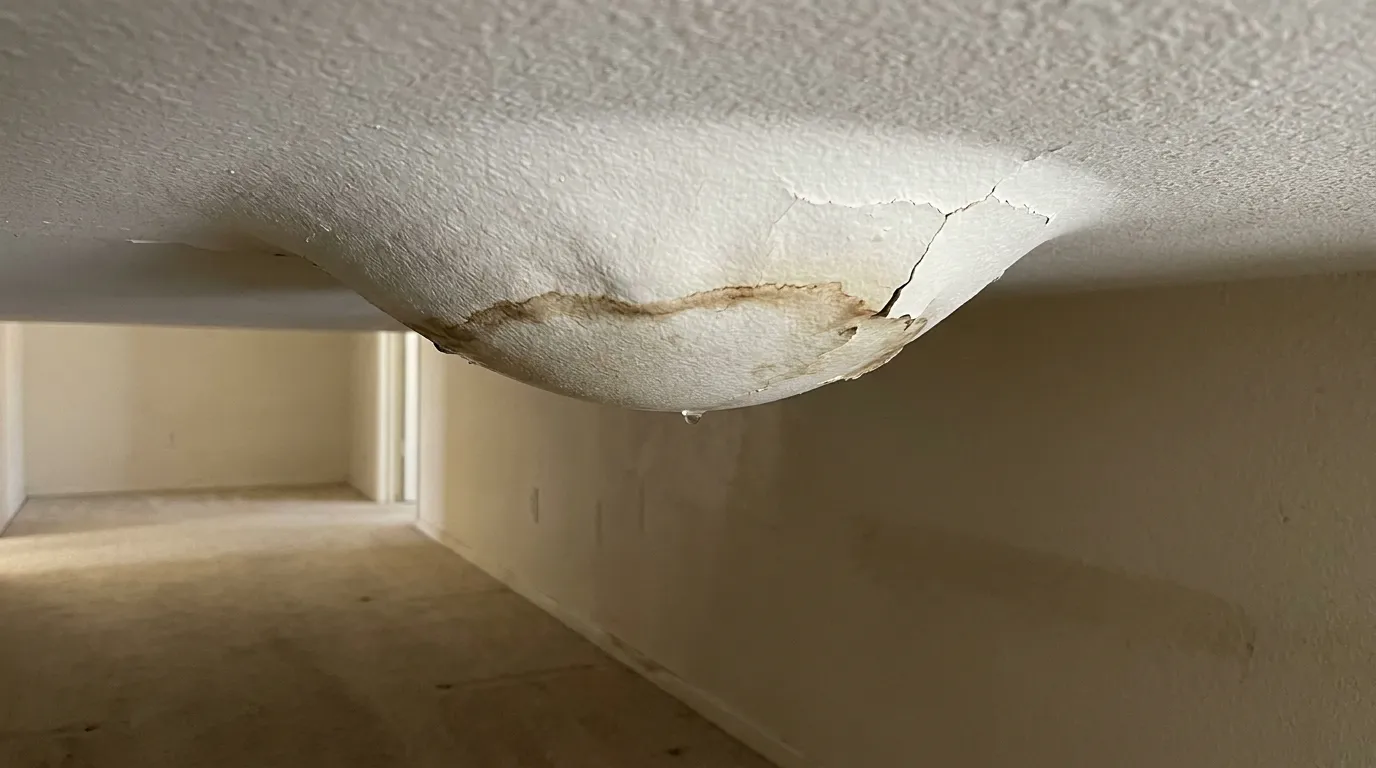
As more water arrives, the signs grow. A faint ring can darken into a stain with a brown edge. Then the paint can bubble or peel, the drywall can soften, and the ceiling can start to sag. A musty smell is another sign that water has been sitting where you can’t see it.
That’s why our work starts with an assessment. We trace the water to its source, work out how far the damage spread, and take moisture readings that find hidden water and guide the drying.
What Should I Check First When My Las Vegas Ceiling Leaks?
We rank these sources from the closest to the farthest: the rooms above the stain, then the attic, then the roof. You can check items 1 and 2 from inside the house. For the attic and the roof, watch the clues from below and leave the climbing to an HVAC technician or a roofer. For each one, the timing of the leak is your clue.
1. A water line above the ceiling. In a two-story home, start with the supply lines to the toilets, tubs, showers, sinks and any washer upstairs. Any water line that runs above the ceiling counts too. These lines come first because they hold water under pressure all day. The EPA’s guide notes that a leak in a pressurized pipe can release much more water than a similar leak on the drain side. The clue: the stain keeps growing even when nobody is using water. A plumber finds and fixes the line.
2. A tub, shower, toilet or drain upstairs. A drain only carries water when someone uses the fixture, so this kind of leak comes and goes. A toilet that overflows can soak the floor and the ceiling below it too. The clue: the stain darkens after a shower, a bath or a flush. A plumber fixes this one too.
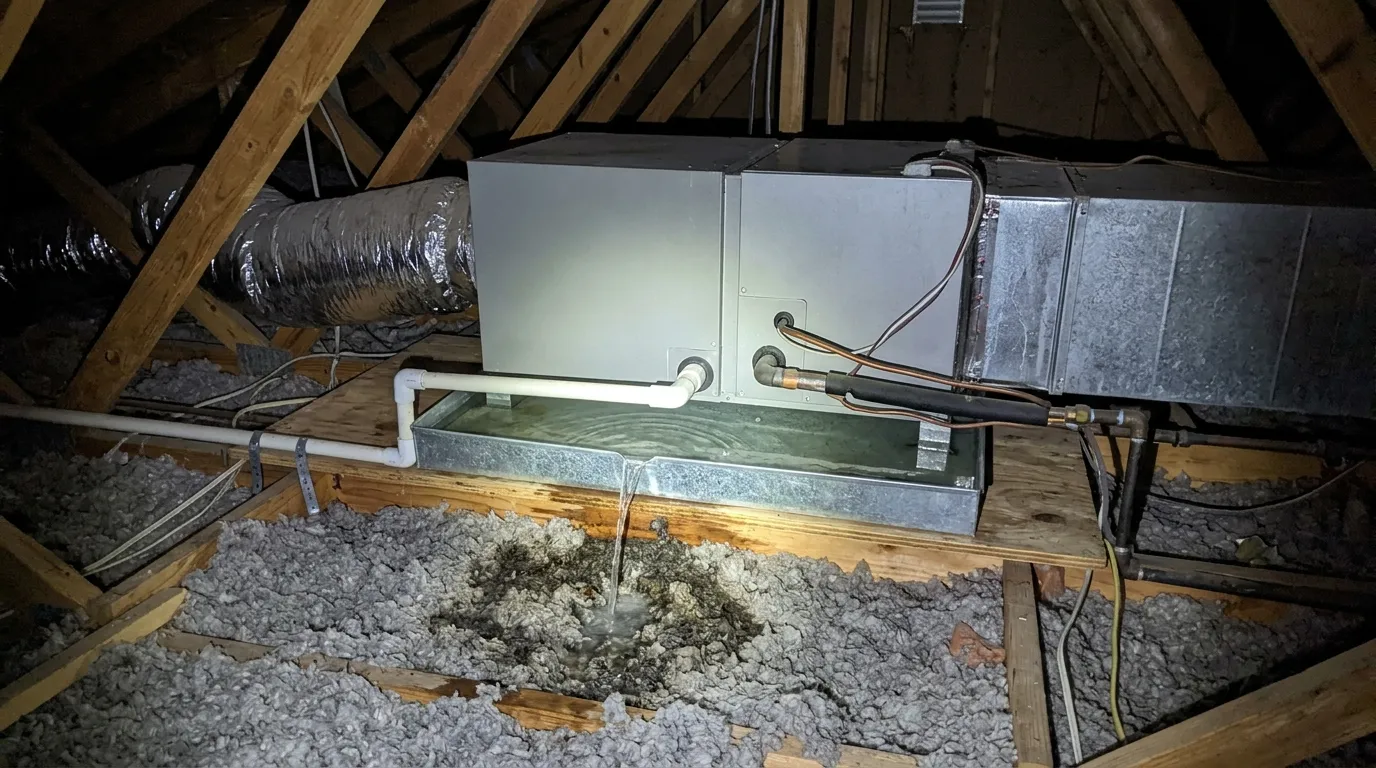
3. The AC’s drain line and drain pan. Your AC’s indoor coil pulls water out of the air, and a drain line carries it away. InterNACHI, the International Association of Certified Home Inspectors, explains what can go wrong in its article on heating and A/C overflow. If the primary drain line clogs, it says, the drain pan and a secondary drain line are supposed to handle the water. Often they do not, it adds, and the result is ceiling and floor damage. This source matters if your indoor coil sits in the attic or on an upper floor. The clue: a stain near the indoor unit that shows up on days the AC runs. An HVAC technician clears the line.
4. A rooftop evaporative cooler, if your home has one. An evaporative cooler (a swamp cooler) keeps water in a sump to wet its pads. The EPA’s guide says the cooler’s overflow drain has to work, so water doesn’t collect in the sump and spill over the pan’s edge. Otherwise, it says, overflows can leak into ductwork or into the building itself. The clue: a stain near the ceiling vent the cooler blows through, on days it runs. Whoever services your cooler fixes the drain.
5. The roof. A roof leak needs rain, so it’s the only one on this list that waits for rain. The clue: a stain that shows up during a storm or right after one. A roofer finds and fixes the gap.
If the timing doesn’t point to one of these, moisture readings can show us where the water went.
Do Monsoon Storms Cause Ceiling Leaks in Las Vegas?
They can, and a monsoon storm may be the first hard rain your roof has seen in months. The National Weather Service (NWS) office in Las Vegas calls Las Vegas the driest major metropolitan area in the continental United States. When monsoon thunderstorms arrive, it says, their gusty winds occasionally cause damage, and at other times their main impact is the heavy rain they unleash.
A dry roof can hide a weak spot for a long time. The EPA’s moisture guide points to the joints and penetrations in a roof, such as plumbing vents, skylights and rooftop air handlers. It calls those the spots where a building’s outer shell is most susceptible to moisture problems. A gap at one of those spots can sit dry for months, then let water in once heavy rain reaches it.
Here’s how a roof leak can look at home. A stain appears during a storm or right after it, then stops growing when the rain stops. Once it dries, it’s easy to think the problem left with the storm. The gap is still there for the next one, and the insulation above the stain may still be wet.
For example, say a storm leaves a brown ring on your bedroom ceiling. By the weekend, the ring looks the same as it did on day one. That doesn’t mean the roof sealed itself. It may only mean it hasn’t rained since.
Monsoon humidity can also work your AC’s drain harder, because humid air gives the indoor coil more water to pull out. InterNACHI notes how much water a coil can produce on a very hot, very humid day. If the drain line is already partly clogged, that extra water can be what pushes it over. So a stain that shows up in a monsoon week may come from the AC, not the roof.
For a roof leak, call a roofer to find and seal the gap. Tell them which room the stain is in and when it showed up, because that helps them decide where to start looking on the roof. A photo of the stain each day also shows whether it’s still growing.
Then have the wet side checked, because the water that got in can stay in the insulation and drywall after the stain stops growing. That side is ours: moisture readings first, then taking out wet materials and drying the structure.
Is a Sagging Ceiling From Water an Emergency for Las Vegas Homeowners?
Yes. A sag is a sign the ceiling has taken on water, and it can come down. The Federal Emergency Management Agency (FEMA) and the American Red Cross warn about this in their flood-recovery booklet, FEMA P-234. After a lot of wind and rain, the booklet says, a ceiling may be holding water. It adds that wet plaster or wallboard is very heavy and dangerous if it falls.
Take these steps in order:
Keep everyone out from under it. That includes pets. Close the door to the room if you can do it without walking under the sag.
Turn the power off, but only from a dry spot. FEMA P-234 says electricity and water don’t mix, and that the power must be turned off at the main breaker box or fuse box. You can do that yourself, it says, if you can reach the box without going through or standing in water. If you would have to step in water, call an electrician.
Don’t touch a wet light fixture or ceiling fan, or the switch that runs it. The Electrical Safety Foundation International recommends that a qualified electrician evaluate water-damaged electrical equipment. It warns that putting the power back on without that check could cause a fire or a shock.
Shut off the water if a pipe is leaking. FEMA P-234 says to cut off the water supply at the shutoff valve if you find a broken or leaking water pipe. If you can’t find the valve, it says to call your water company for help.
Call us. We take calls 24/7, every day of the year, and we’re on site in under an hour. The inspection and the estimate are free. You don’t need to drain the sag yourself, because taking out wet drywall and insulation is part of our job.
A stain on a firm ceiling isn’t the same emergency, but it still means water got in, and it may still be getting in. The insulation above can stay wet long after the stain stops growing. Wet materials left in place can also grow mold, which our separate guide to mold growth in Las Vegas homes covers.
When we arrive, we take moisture readings to find the wet areas, including the ones above the drywall. We take out wet drywall and insulation that need to come out. Air movers and dehumidifiers then dry the structure, and we monitor humidity while the drying runs. If water also reached the floor, extracting it from the carpet or tile below comes first.
Patching, replacing and painting the drywall come after the drying, and that work belongs to other trades, not to us. If the wet ceiling has popcorn texture, it raises an asbestos question of its own, which our popcorn ceiling guide covers. Your insurance company decides what your policy covers, and we work with all insurance companies and help you with the claim.
The Bottom Line on Ceiling Water Damage in Las Vegas
Ceiling water damage in a Las Vegas home comes from water above it, and there are five places to check. In order, they are a water line above the ceiling, a fixture or drain upstairs, the AC’s drain line, a rooftop evaporative cooler and the roof. Check them from the closest to the farthest, and use the timing of the leak as your clue. Water can travel along the framing first, so the stain may not sit under the source.
A monsoon storm can find a roof’s weak spot after months of dry weather. A stain that stops growing after the rain still needs a look. A sagging ceiling is an emergency. Keep everyone out from under it. Turn the power off only from a dry spot, or call an electrician. Stay away from wet lights and fans, shut off the water if a pipe is leaking, and call us.
A plumber, an HVAC technician or a roofer fixes the source. We find where the water went, take out wet materials and dry the structure, in Spring Valley homes and across the Las Vegas valley. Day or night, we’re on site in under an hour, and the inspection and the estimate are free. Our FAQ also answers whether we’ll need to cut out drywall and what to do while you wait for us.