What Are the Signs of a Slab Leak in Las Vegas?
October 18, 2026 · 10 min read
On this page
The signs of a slab leak in Las Vegas are a jump in your water use, damp flooring or a musty smell with no spill nearby, and running water you can hear with everything off. The others are a warm spot on the floor, low water pressure and new cracks. If the Las Vegas Valley Water District (LVVWD) supplies your water, the first sign may come as a text or an automated call from LVVWD about a possible leak.
Below, we rank those six signs from easiest to spot to hardest, then walk through LVVWD’s meter check. Last, we sort out who does what. A plumber finds and fixes the pipe. We handle the water it leaves in your home, from water extraction to drying.
What Is a Slab Leak in a Las Vegas Home?
A slab leak is a leak in a water line that runs under or through the concrete slab a house is built on. In a home on a slab, those lines sit in or below the concrete. You can’t open a cabinet and look at them, the way you can with the pipe under a sink. So the first thing you notice is what the water does, not the pipe.
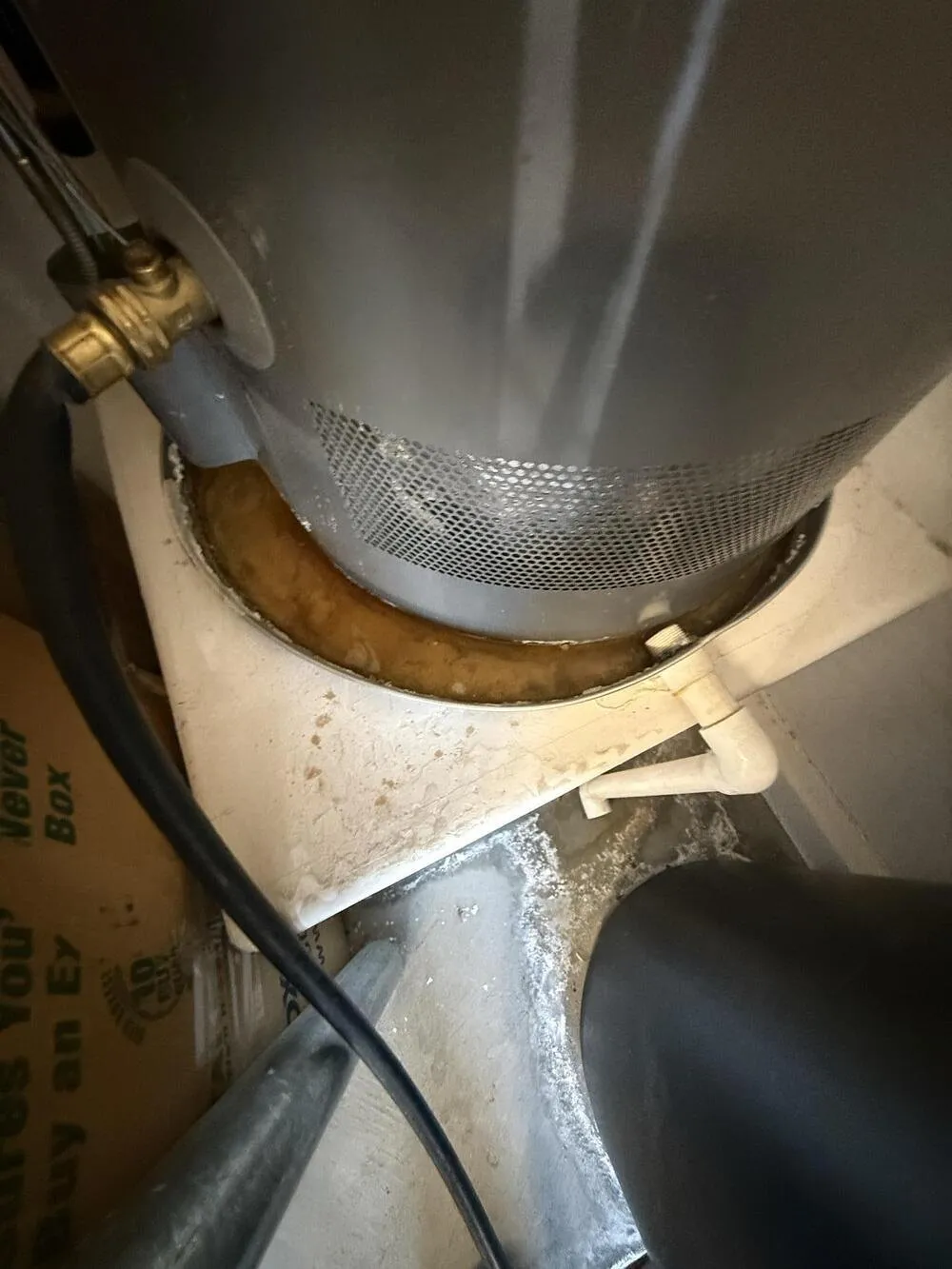
The leak can be in a hot-water line or a cold one. That difference matters later, because a leaking hot-water line can warm the floor above it, while a cold-water leak leaves no warm spot to find.
The City of Las Vegas has a rule for hot-water lines under the floor. Its Department of Building and Safety handout on residential water heater installs says hot-water piping in unconditioned spaces, “including under slab,” has to be insulated. The handout is a summary of code for City of Las Vegas permits. It doesn’t say how many homes have lines there.
Why does a line under a slab start leaking? Pipes can corrode as they age, and corrosion can weaken a section of pipe until a pinhole opens. The ground and the slab can also shift, and that puts stress on the pipes running through or under the concrete. Clark County’s Expansive Soil Guidelines Map shows where near-surface soils in the Las Vegas Valley tend to swell, in hazard classes from “None to Low” to “Critical,” though the County notes that any one site can vary considerably from the map. Which cause applies to your home is something the plumber can tell you once the pipe is found.
Say the hot-water line from your water heater to a back bathroom runs under the hallway. If it springs a pinhole leak, water can escape under the house for some time before any of it shows on top of the floor. That’s why a slab leak can run unnoticed for a while, even under rooms you walk through every day. It’s also why we start the list of signs with the one that reaches you without any looking.
What Are the First Signs of a Slab Leak in Las Vegas Homes?
We rank these six signs from easiest to spot to hardest. The first can reach you on a bill or by phone. The middle three need you in the right room. The last two have so many other causes that they’re the hardest to pin on a slab leak.
1. Your water use jumps. This one comes to you. LVVWD says unexpected changes in water use can be an early sign of a leak, and if LVVWD is your utility, its My Account tool shows your daily use. If the leak is in a hot-water line, your energy bill can rise too. For example, one poster on Reddit’s r/vegaslocals traced a higher gas bill to a hot-water line leaking into the slab. Cold water kept refilling the water heater, which kept the gas on.
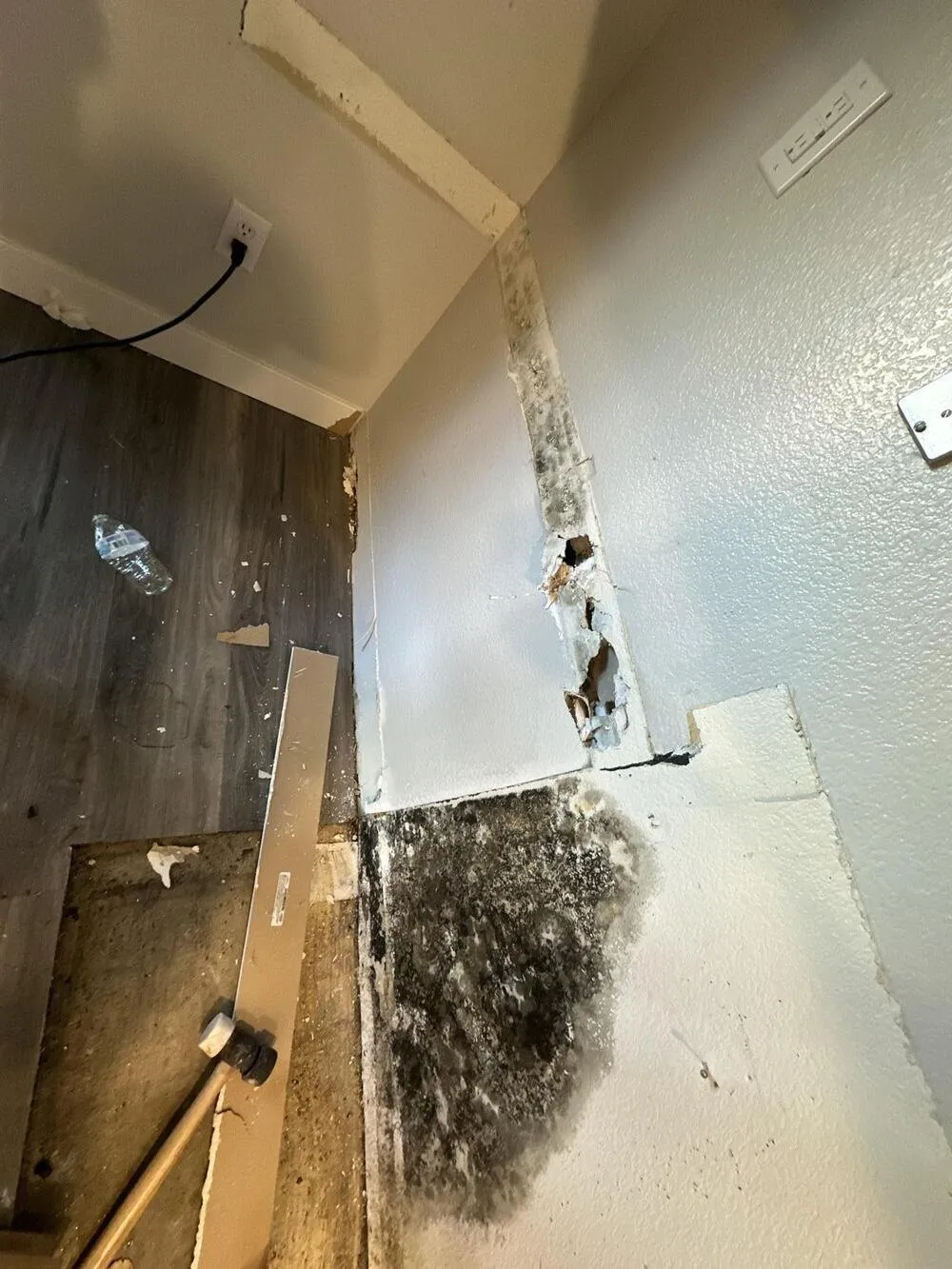
2. Damp flooring or a musty smell with no spill nearby. Once water works its way up, you can see or smell it. Damp patches often show up near walls and baseboards. For example, a strip of wet carpet along a hallway wall, with no bathroom on the other side, is worth a closer look. A musty smell can mean mold or mildew has started, and when we inspect for mold, we look for the source and the affected areas.
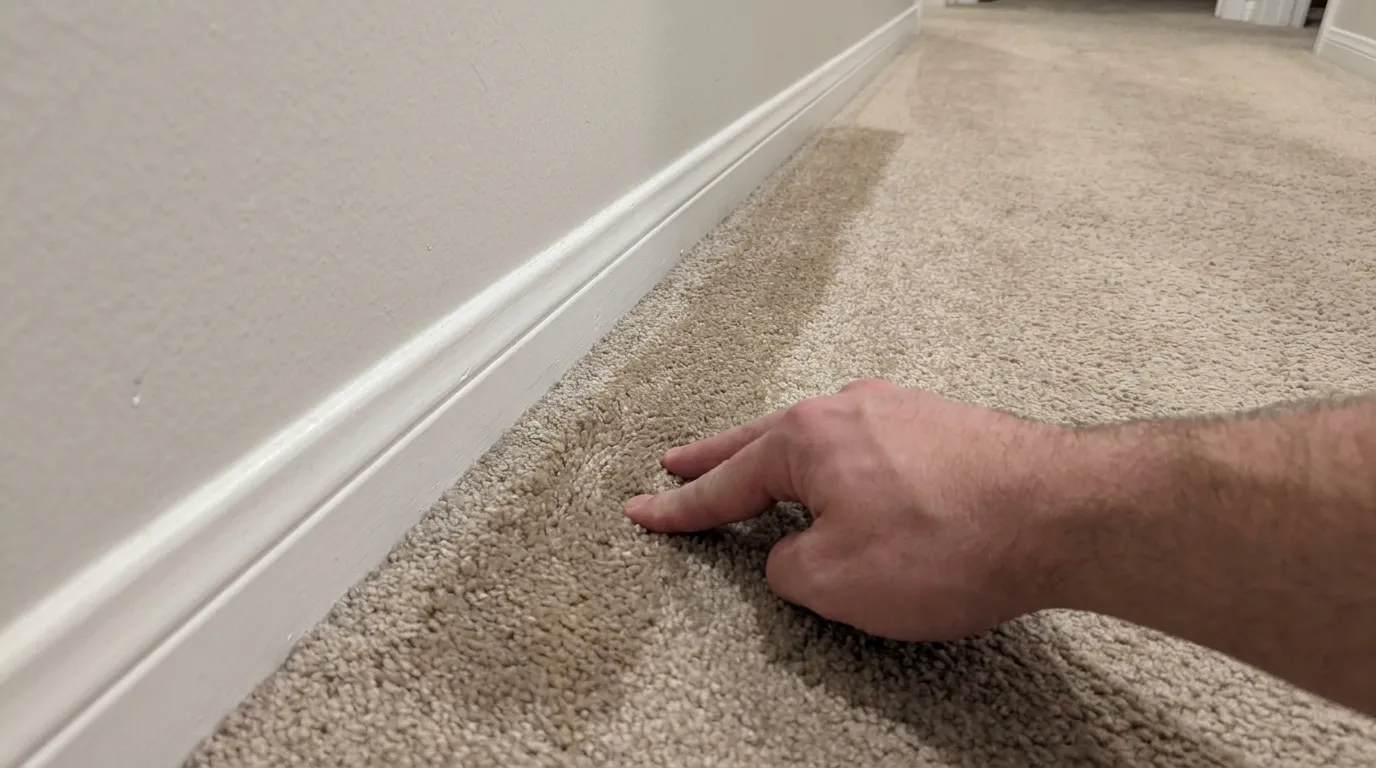
3. Running water you can hear with everything off. This one needs a quiet house. If you hear water moving under the floor or in a wall while every faucet, appliance and sprinkler is off, that sound is worth tracking down.
4. A warm spot on the floor. You have to feel this one, usually with bare feet, and it points to a leak in a hot-water line. The warm patch tends to follow the pipe, such as the run from the water heater to a bathroom or the kitchen. It’s easier to feel on tile than through carpet and pad. This Old House’s guide to slab leaks warns that prolonged exposure to hot spots can be dangerous for young children and pets and may cause skin irritation or burns.
5. Low water pressure. A leak under the slab can pull pressure from the rest of the house. So can a water softener, a pressure reducing valve that isn’t set right, clogged faucet aerators or a shutoff valve that isn’t fully open. So pressure ranks near the bottom.
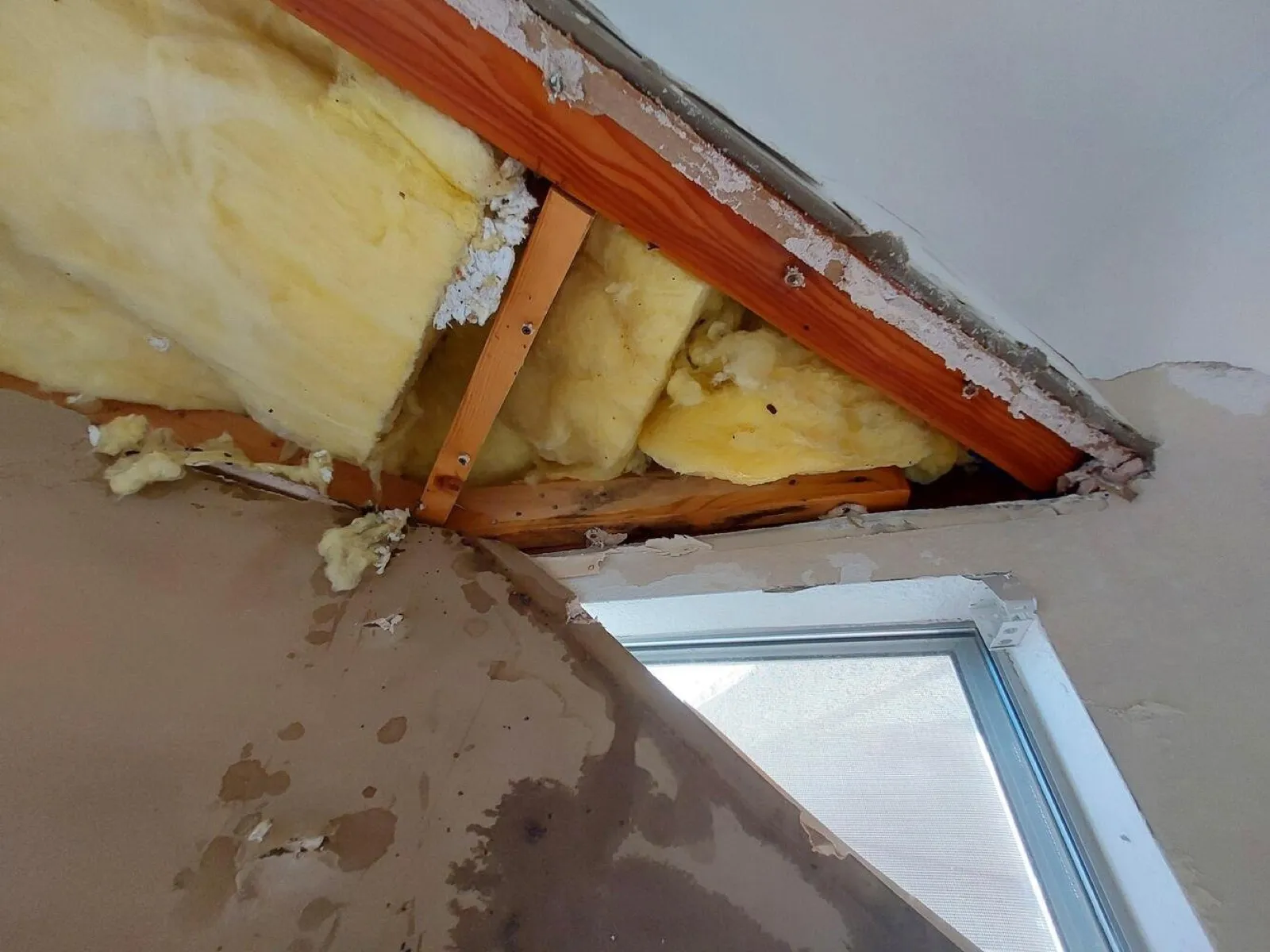
6. New cracks in walls, baseboards, tile or the slab. Cracks take the closest look and are the hardest sign to read. Moisture from a slab leak can crack the lower parts of walls and baseboards, but ground movement can crack a slab with no leak at all. So a crack beside a damp baseboard tells you more than a crack alone.
One sign on its own doesn’t prove a slab leak. Several together, or one sign plus a meter that keeps moving with everything off, is a good reason to call a plumber.
How Do I Check My Las Vegas Water Meter for a Slab Leak?
This Old House’s guide to slab leaks says one can go undetected for days, weeks or even months, because a small leak can be no more than a drip. If LVVWD supplies your water, its meters can shorten that wait: LVVWD says it reaches out to account holders when it detects continuous water flow through the meter at their property for at least three days. Keep your phone number and email current in My Account so that alert reaches you.
These are LVVWD’s leak-finding steps, written for LVVWD customers in its service area, which includes metropolitan Las Vegas and parts of unincorporated Clark County. The Southern Nevada Water Authority (SNWA) lists Henderson and North Las Vegas as member agencies apart from LVVWD. If your water bill comes from either city, check that city’s own guidance instead.
Before you start, note LVVWD’s warning: troubleshooting a leak on your own carries a risk of injury or property damage, so use caution. LVVWD says most of its residential meters sit near the front yard or in the front sidewalk, under a lid marked “water” or “LVVWD.”
- Turn off all water inside and outside your home. Then check the red or white flow-indicator triangle on your water meter. If it’s still moving, you may have a leak.
- Find your shutoff valve. It’s usually in the front yard near the sewer riser cap, in the garage or in your home’s manifold system. Make sure the water is off there.
- Go back to the meter and check the triangle. If it’s still moving, the leak is most likely underground between the shutoff valve and the meter. If it has stopped, the leak is somewhere else around your home.
- Shut off your anti-siphon valve too. If the triangle keeps moving after that, the anti-siphon valve may be broken.
- When you’re done, close the meter cap, which keeps the lens from getting damaged, and put the meter box lid back.
LVVWD’s steps don’t name slab leaks. What they do is split the line in the yard from everything past your shutoff valve. Say the triangle moves with every fixture off, then stops once you close the valve in the garage. By LVVWD’s steps, the leak is somewhere else around your home, past that valve. That’s where a leak in a line under your slab would show up. So would a running toilet or a leaking water softener, and the same page has checks for those.
One catch: these steps are written for the triangle on a mechanical meter. LVVWD is replacing older mechanical meters with ultrasonic meters that have no moving parts, so a new meter has no spinning triangle to watch. If yours was swapped recently, take questions about the replacement to LVVWD’s Customer Care, and use My Account to see your daily use.
Who Should I Call if There Are Signs of a Slab Leak in My Las Vegas Home?
A slab leak is two jobs for two trades. The pipe belongs to a plumber. The water it left in your home is the part we handle.
Call a plumber to find and fix the pipe. How the plumber fixes it, whether through the slab, with a reroute or with a repipe, is the plumber’s call. If the leak is hard to find or has run up your bill, LVVWD’s Customer Assistance Programs page lists two programs worth a look. One is the SNWA’s Leak Detection Assistance Program, a voucher toward professional leak detection by a participating Water Smart Plumber for eligible single-family homes. The other is LVVWD’s Leak Adjustment Program, which customers with an unusually high bill from a leak may qualify for once the leak is fixed.
Until the plumber arrives, This Old House’s guide advises shutting off your main water valve if you see significant water coming in or hear a strong rushing sound. It adds that a smaller or less obvious leak may not need that step.
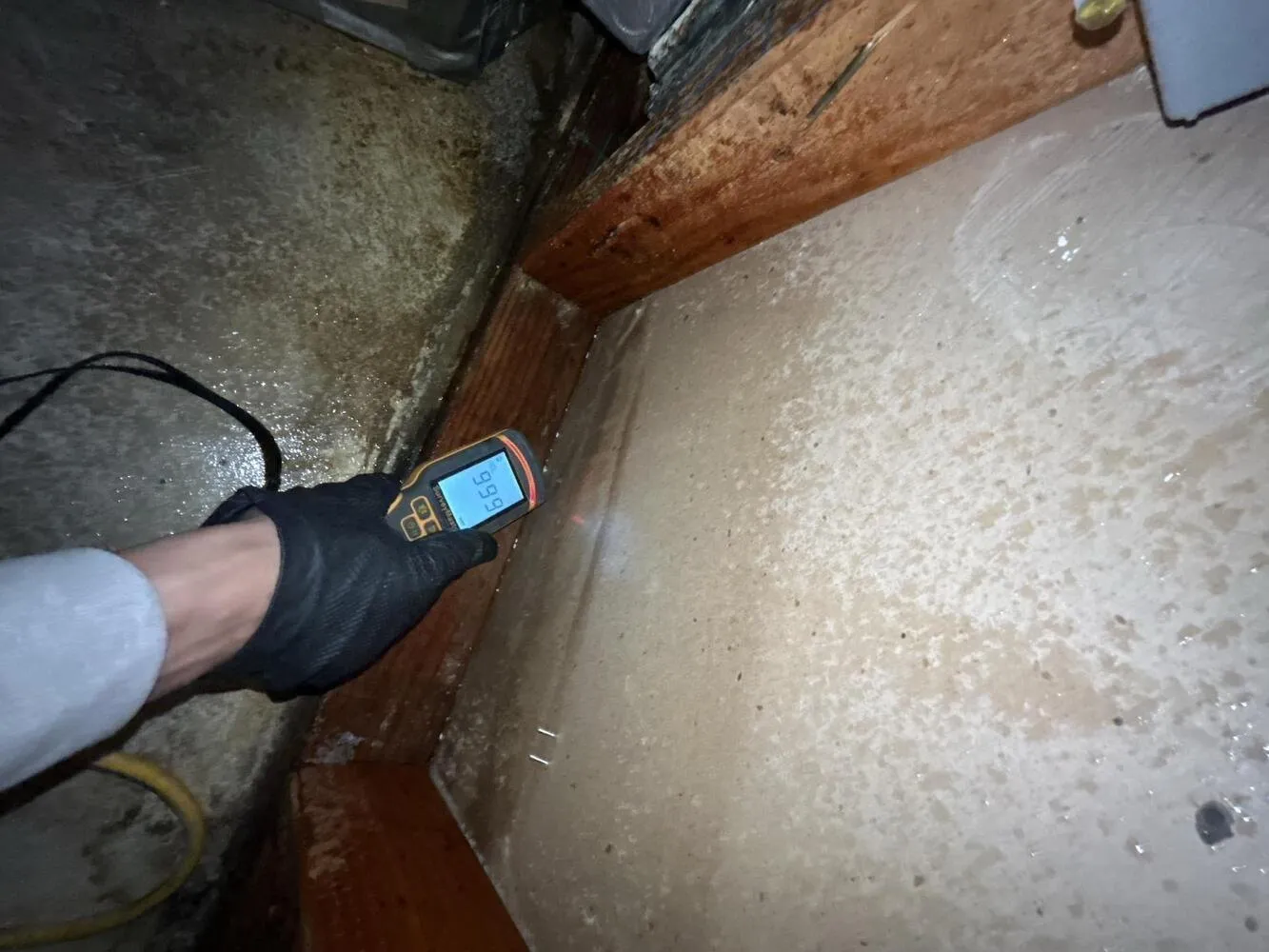
The water that already got out stays behind after the pipe is fixed. Depending on where the leak is, how much water escaped and for how long, moisture can reach flooring, baseboards, walls and cabinets. That part is ours. We start with an assessment and take moisture readings to find hidden water and see how far the damage has spread. Then we extract the water and dry the structure with air movers and dehumidifiers, and we monitor humidity while the drying runs. If carpet, baseboards or the bottom of the drywall are soaked, we remove those wet materials. For example, if water came up along a bedroom wall, we’d take readings in the carpet pad, baseboard and drywall there. Then we’d decide what has to come out.
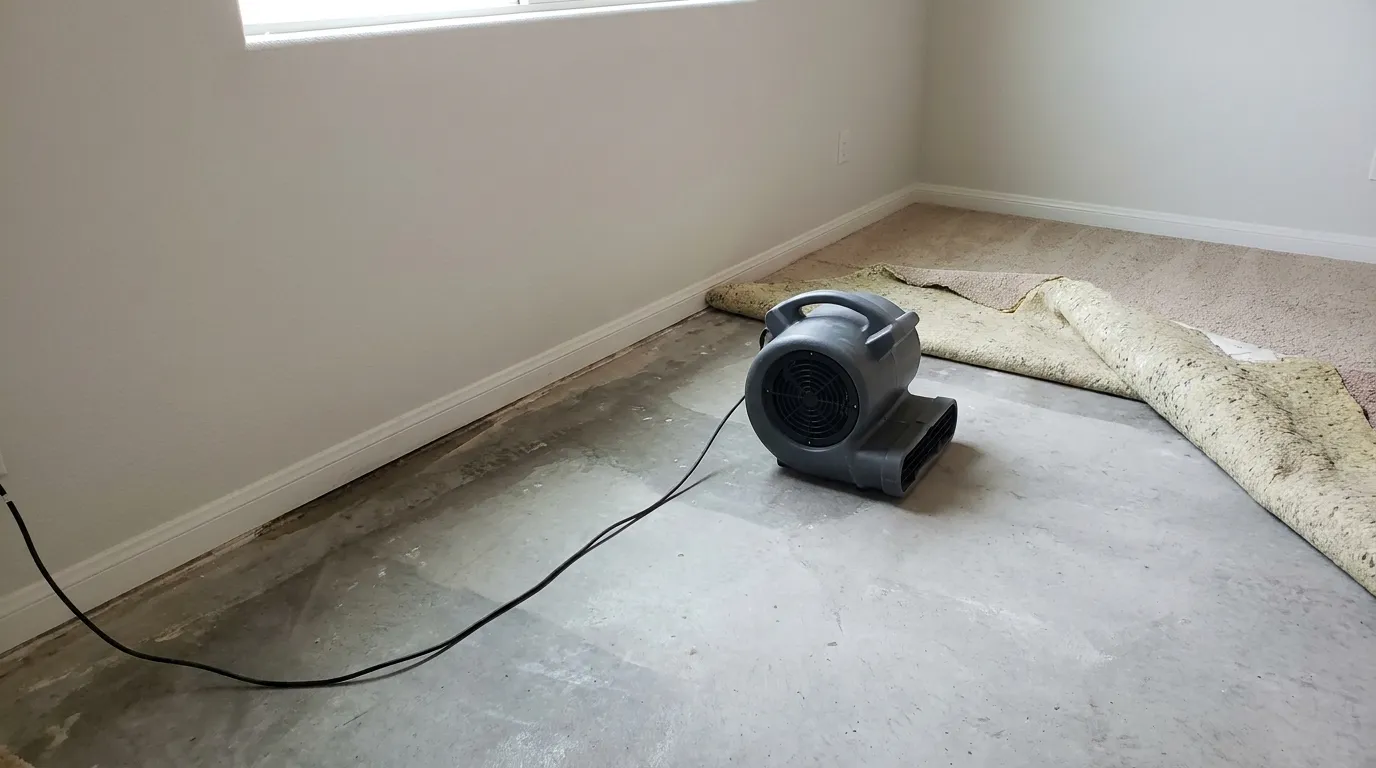
Your insurance company decides what your policy covers, and we work with all insurance companies and help you with the claim; our separate post on homeowners insurance and water damage in Nevada takes that question further. You can call us at any hour, since we’re open 24/7. We’re on site in under an hour, and the inspection and estimate are both free. If the water has spread past one room, here’s how we dry out a water-damaged home. And whether you’re in Henderson, Enterprise or one of the Summerlin neighborhoods, you’re inside our Las Vegas Valley service area.
The Bottom Line on Slab Leaks in Las Vegas
A slab leak hides under concrete, so you find it by its signs. From easiest to spot to hardest, the six are a jump in your water use, damp flooring or a musty smell with no spill nearby, and running water you can hear with everything off. Then come a warm spot on the floor, low water pressure and new cracks. A single sign doesn’t prove a slab leak. Several together, or one sign plus a meter that keeps moving with everything off, is a good reason to call a plumber.
If LVVWD supplies your water, its meters can cut the time a hidden leak goes unnoticed: LVVWD says it reaches out to account holders when it detects continuous flow through the meter at their property for at least three days. Keep your contact details current in My Account so that alert reaches you. If your meter has the flow-indicator triangle, LVVWD’s steps can also tell a leak in the yard line from one past your shutoff valve. If your water bill comes from Henderson or North Las Vegas, check that city’s own guidance instead. A plumber finds and fixes the pipe. We take moisture readings, extract the water and dry your home, and we’re open 24/7 with free inspections.