What Should You Do After a Monsoon Flood in Las Vegas?
October 18, 2026 · 10 min read
On this page
After a monsoon flood in Las Vegas, stay out until authorities give the all-clear and the house has been checked. If you smell gas, leave without touching a switch, then call 911 and Southwest Gas from a safe place. Handle the power only from a dry spot. Once it is safe inside, photograph the damage before you start cleaning. Then get the standing water out, start the drying, and throw away what soaked up a lot of water and can’t be cleaned and dried.
Each step below comes from the Centers for Disease Control and Prevention (CDC), the U.S. Environmental Protection Agency (EPA), the National Weather Service, the City of Las Vegas or Southwest Gas. Our part is the water. Our flood cleanup includes water removal, drying and sanitation, and we’re open 24/7, every day of the year.
How Does Monsoon Flood Water Get Into Las Vegas Homes?
Monsoon flood water starts as thunderstorm rain. The National Weather Service office in Las Vegas says that in the warm months, typically in July and August, monsoon moisture moves into the Mojave Desert and sets off scattered thunderstorms, and that by September the monsoon typically wanes. Those storms typically build over the mountains around the valley and then move into it. The NWS says their heavy rain can trigger flash floods that often sweep down normally dry washes or pour water into low-lying areas.
Once the rain lands, it runs. The City of Las Vegas says the city’s hard, dry soil doesn’t absorb water quickly, that paved surfaces and buildings reduce natural drainage, and that runoff from heavy rain nearby could flow downstream to your location. For example, your street can run with water from a storm that didn’t reach your roof.
The valley does have a system for that runoff. The Clark County Regional Flood Control District says that in 2026 its system includes 113 detention basins and more than 722 miles of channels and underground storm drains. Flash floods still happen, though, and a house sitting low on its street or lot can be in their path.
At the house, water collects where it can’t drain away, like a low corner of the yard or a driveway that slopes down to the garage. It can come in at the lowest opening it reaches, such as a door threshold or the gap under a garage door. In EPA’s terms, that is flood water: its flood cleanup fact sheet covers flash floods and points clean-water damage, like a pipe leak or rainwater intrusion, to its mold guidance. Still coming in? The flood and storm questions on our FAQ page cover what to do right then.
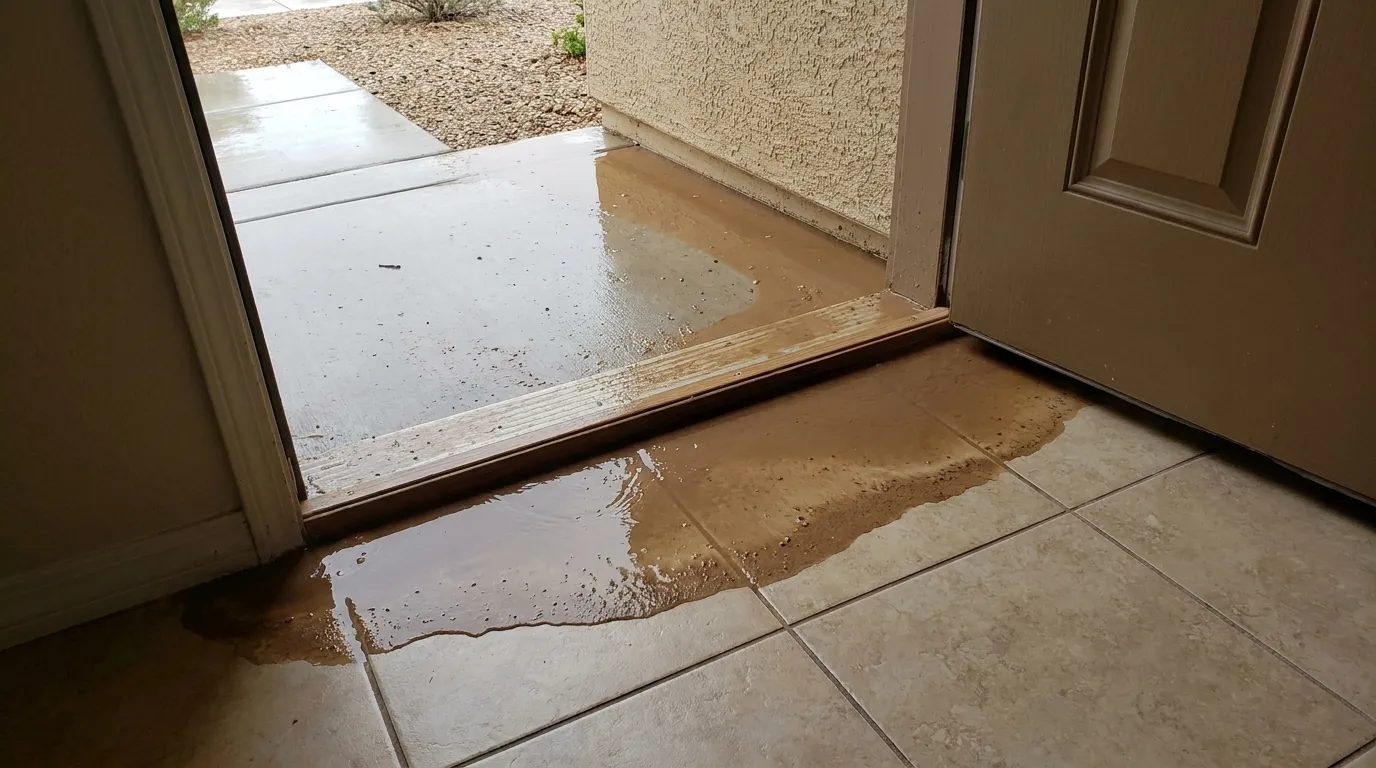
Rain can also get in through a roof during a monsoon storm, a different path that our guide to ceiling water damage covers.
What Should I Do First After My Las Vegas Home Floods?
Work through these in order: safety first, then a record of the damage, then the water.
- Wait for the all-clear. The National Weather Service says not to enter a flood-damaged home until authorities give the all-clear, and to avoid standing water, which can hide toxins, chemicals and sharp objects. From outside, look for a sagging roof, walls that are not straight, missing support columns or new cracks. EPA says to treat a house with any of these as unsafe until a qualified professional verifies it is safe to enter.
- Get out if you smell gas. Check for gas before you touch any switch. Southwest Gas, which serves the Las Vegas area, says signs of a leak include a rotten-egg smell (even a faint one), a hissing sound and standing water that keeps bubbling. If you notice one, follow its steps. No smoking, matches or lighters. Leave every electric switch, thermostat and appliance control as it is, and avoid anything else that could make a spark. Don’t start or shut off a car or other engine, and don’t run an automatic garage door. Get out of the house and the area right away, tell others to leave, and leave the doors open. Once you’re somewhere safe, call 911 and Southwest Gas. Don’t return until you’re told it’s safe, the CDC says.
- Handle the power from a dry spot only. EPA says not to enter your home until you are sure the electricity is off. The CDC warns never to turn the power on or off yourself, or use an electric tool or appliance, while standing in water. Is there standing water in the house? The CDC says that if you can reach the main power switch from a dry location, turn the power off, even if that delays cleaning. If you would have to step into standing water to reach it (say, a panel in a flooded garage), call an electrician to turn it off. Either way, have an electrician check the electrical system before the power goes back on.
- Put on protective gear before you go in. EPA says flood water can contain bacteria, chemicals or other hazards, and its minimum gear for going in is an N95 respirator, goggles without holes, gloves and clothing that covers exposed skin. Add boots or waders if there is standing water.
- Go in by daylight. The CDC suggests returning during the day and using battery-powered flashlights or lanterns, not candles, gas lanterns or torches.
- Air it out if it sat closed. If the house was closed up for several days, the CDC says to go in briefly, open the doors and windows, and let it air out for at least 30 minutes before you stay. The CDC also says to assume a flooded house closed up that long has mold, and our guide to mold growth covers the timing.
- Photograph everything before you clean. The City of Las Vegas says to photograph any damage for insurance and notes that standard homeowner’s policies typically do not include flood coverage, which our guide to Nevada homeowners insurance explains. Your insurance company decides what your policy covers. We work with all insurance companies and help you with the claim.
- Keep any generator outside. The CDC says never to run a generator, pressure washer or other gasoline-powered engine inside a home, basement, garage, carport, porch or other enclosed or partly enclosed space. The CDC also says never to run one less than 20 feet from any door, window or vent, even with the doors and windows open. Run that way, it can cause carbon monoxide poisoning. The CDC says to talk to your utility company about using one, too, and warns that it is against the law and a violation of electrical codes to connect a generator to your home’s electrical circuits without the approved, automatic-interrupt devices.
- Get the water out and start drying. The CDC says to run a wet-dry shop vacuum or an electric pump on house power only once an electrician says the power is safe to turn on; until then, a portable generator set up as in step 8 can run them. Wear rubber boots while you work in wet areas. If the flood affected any part of your air ducts or your heating, ventilation and air conditioning (HVAC) system, EPA says not to use the system to dry the house until a professional tells you it is safe. Or hand the job off: we’re on site in under an hour, and our water extraction gets the standing water out before the drying begins.
What Should I Throw Out After a Flood in Las Vegas?
Start with one rule from EPA’s flood cleanup guide: you can usually clean and dry materials that do not soak up water, and you should throw away materials that soak up a lot of water and can’t be cleaned and dried. EPA’s examples put metal, glass and hard plastic on the side you can usually clean and dry, and drywall, carpets and ceiling tiles on the side that soaks up a lot of water. Some fabrics may be saved in the laundry, too.
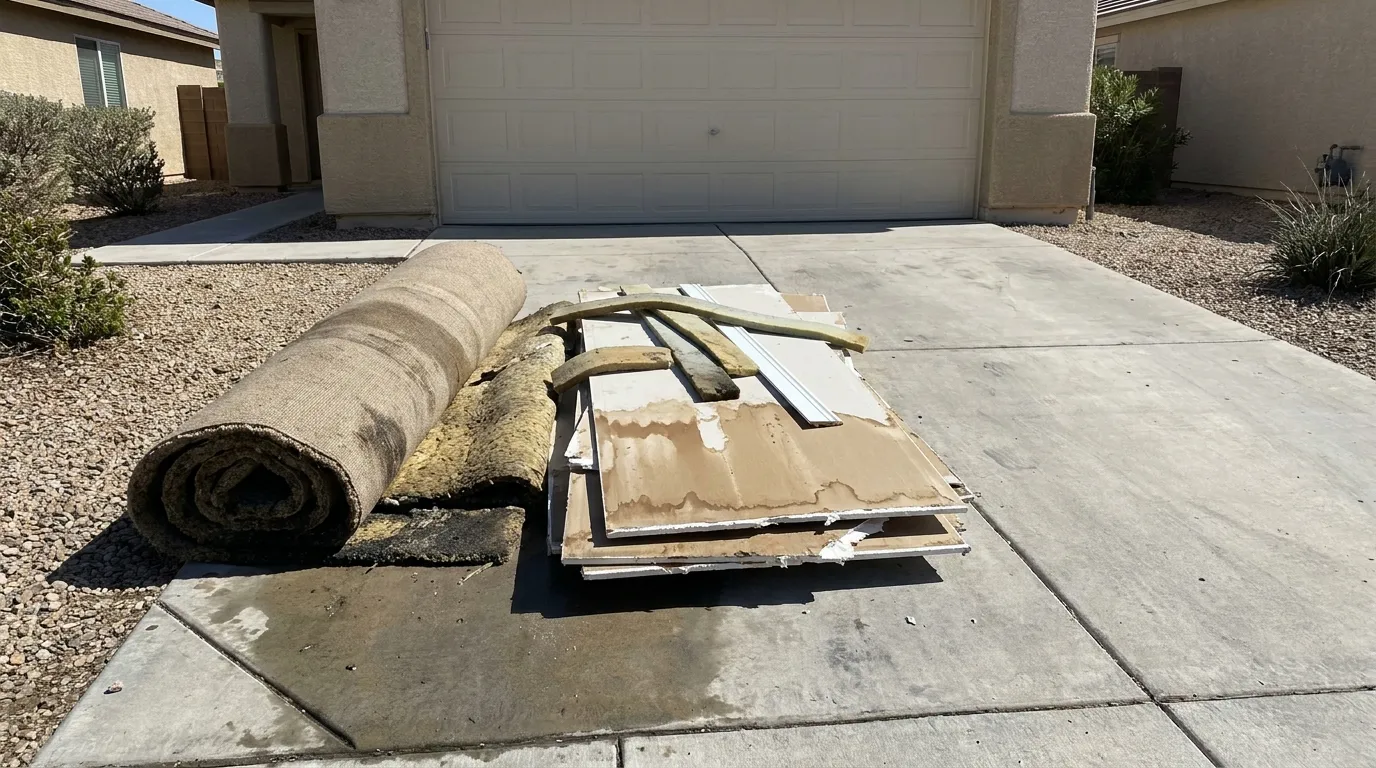
Food is simpler. The CDC says to throw away food that may have come in contact with flood or storm water, perishable food that wasn’t refrigerated properly during a power outage, and anything with an unusual odor, color or texture. Unsafe food can make you sick even if it looks, smells and tastes normal, so when in doubt, throw it out.
Check the garage, too. For example, the water may have reached an e-bike, an e-scooter or an electric lawn mower. EPA says flooded lithium-ion batteries like theirs should be removed from your home or garage in case of fire, and that smaller ones should not go in regular trash or recycling.
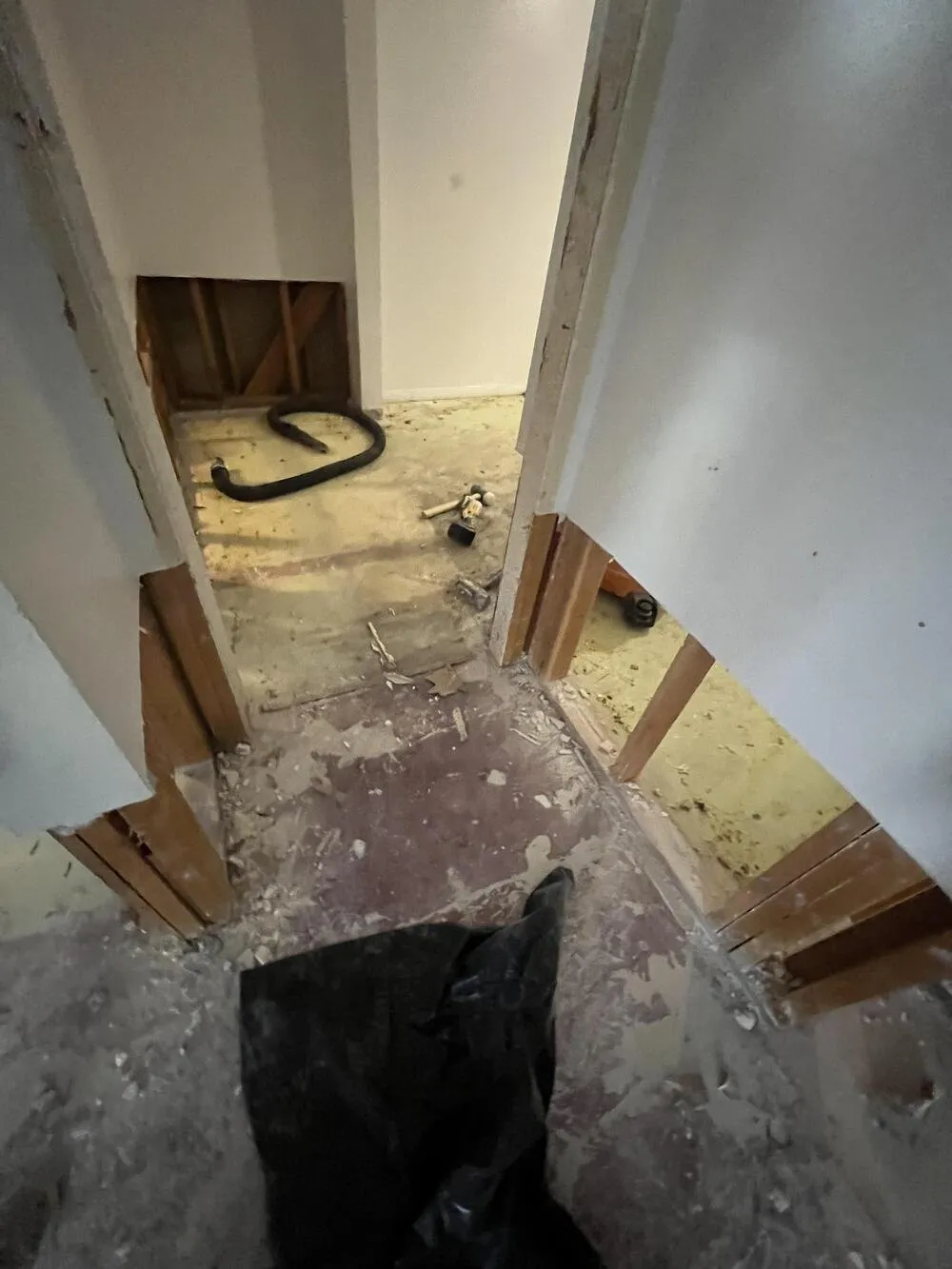
Then there is the house itself. We remove wet materials such as drywall, insulation, carpet, tile and baseboards. The hallway at the top of this page shows that kind of removal, with the bottom of the drywall cut away and the flooring pulled up.
Before anyone pulls up flooring, know that EPA warns vinyl floor tile may contain asbestos and says not to remove asbestos-containing floor tile even if it is damaged, but to hire an asbestos professional. We’re a licensed asbestos abatement contractor, and our asbestos guides go into more depth.
Before anything goes to the curb, check your city or county’s rules for flood debris, and keep your photos from step 7.
Can I Clean Up Flood Water in My Las Vegas Home Myself?
You can do some of it, and EPA’s flood pages include how-to guidance for homeowners. EPA also says flood cleanup can be difficult and dangerous work, and that it may be best to get help from experienced and qualified professionals if you can.
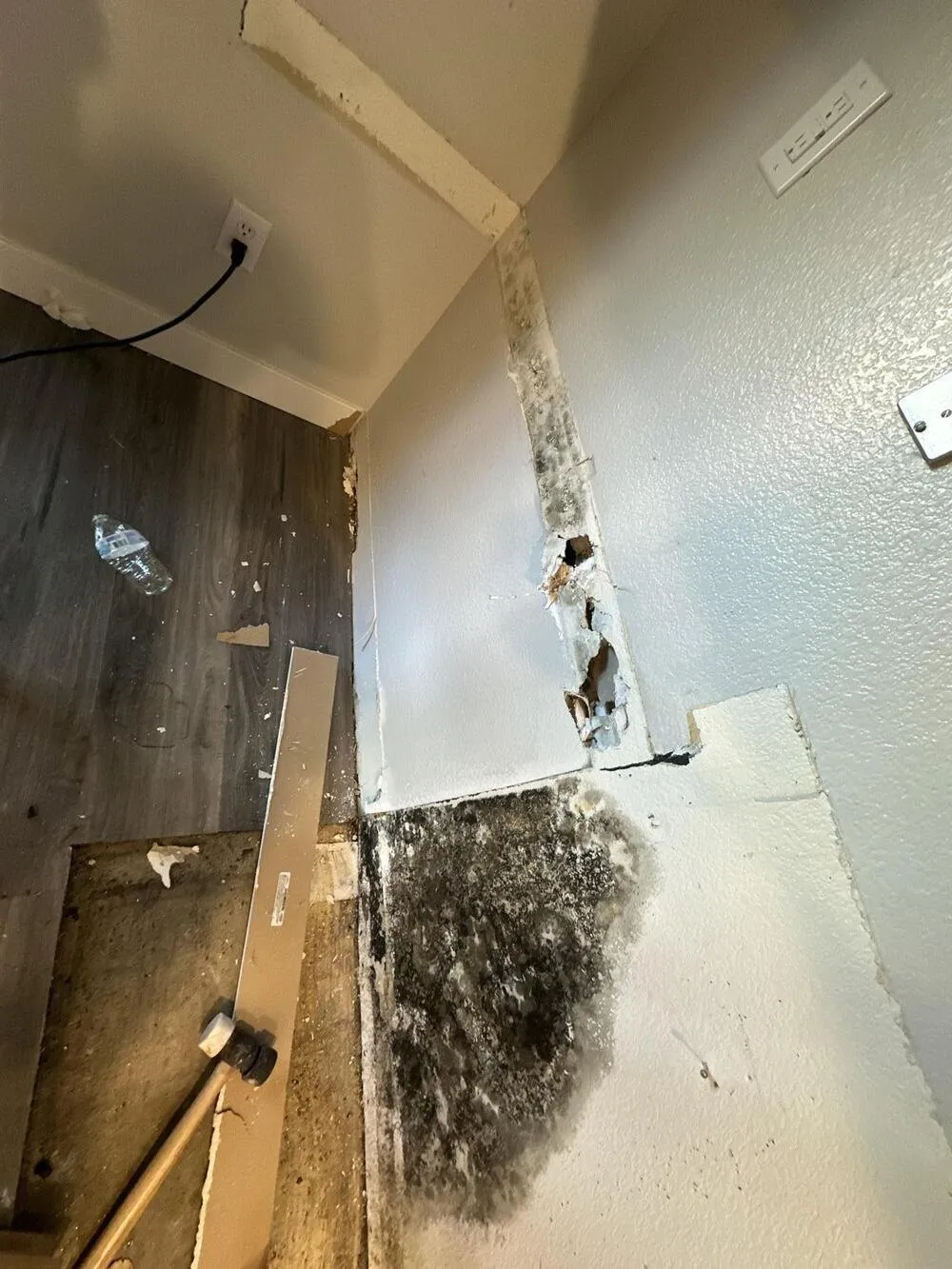
Some people should sit it out. EPA says people with breathing problems like asthma or weakened immune systems should stay away from moldy sites and should not take part in flood cleanup, and that children and pregnant people should not take part either.
If you do the work, keep your gear from step 4 on while you clean. EPA’s cleaning advice starts with clean water and detergent, and one EPA rule comes before any other product: don’t mix bleach with other chemicals, such as ammonia or chemicals the flood water brought in, because the combination can be toxic.
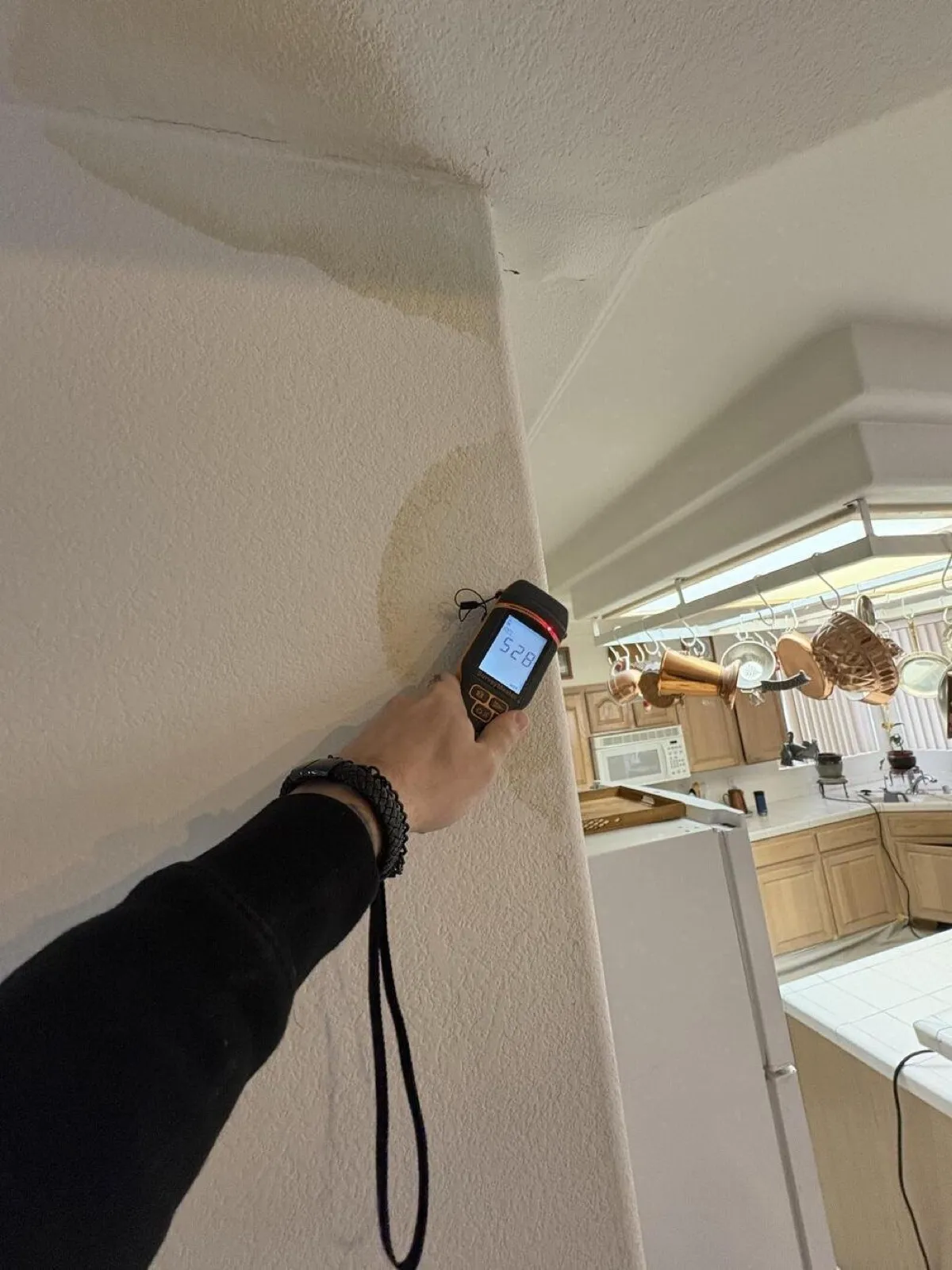
Drying is the part that decides it. The CDC says to open windows and doors if weather permits. Once the electricity is safe to use, EPA’s flooded-home guide says to run fans and dehumidifiers, and the CDC says to set fans at a window or door so they blow air out of the house. If you can already see mold, EPA says to wait on fans and dehumidifiers until you have gently cleaned the mold you can see. EPA says drying can take a long time, usually several days to weeks, and that you shouldn’t seal flooded wall cavities or paint wet surfaces until the materials are completely dry on the inside. A moisture meter can help you check.
Here is where we would draw the line. Get help if:
- Anyone doing the work is on the sit-it-out list above.
- Flood water reached the air ducts or HVAC system, which step 9 leaves to a professional.
- Water got into the walls or under the flooring, where it has to dry completely on the inside.
- The flooring may be vinyl tile with asbestos in it.
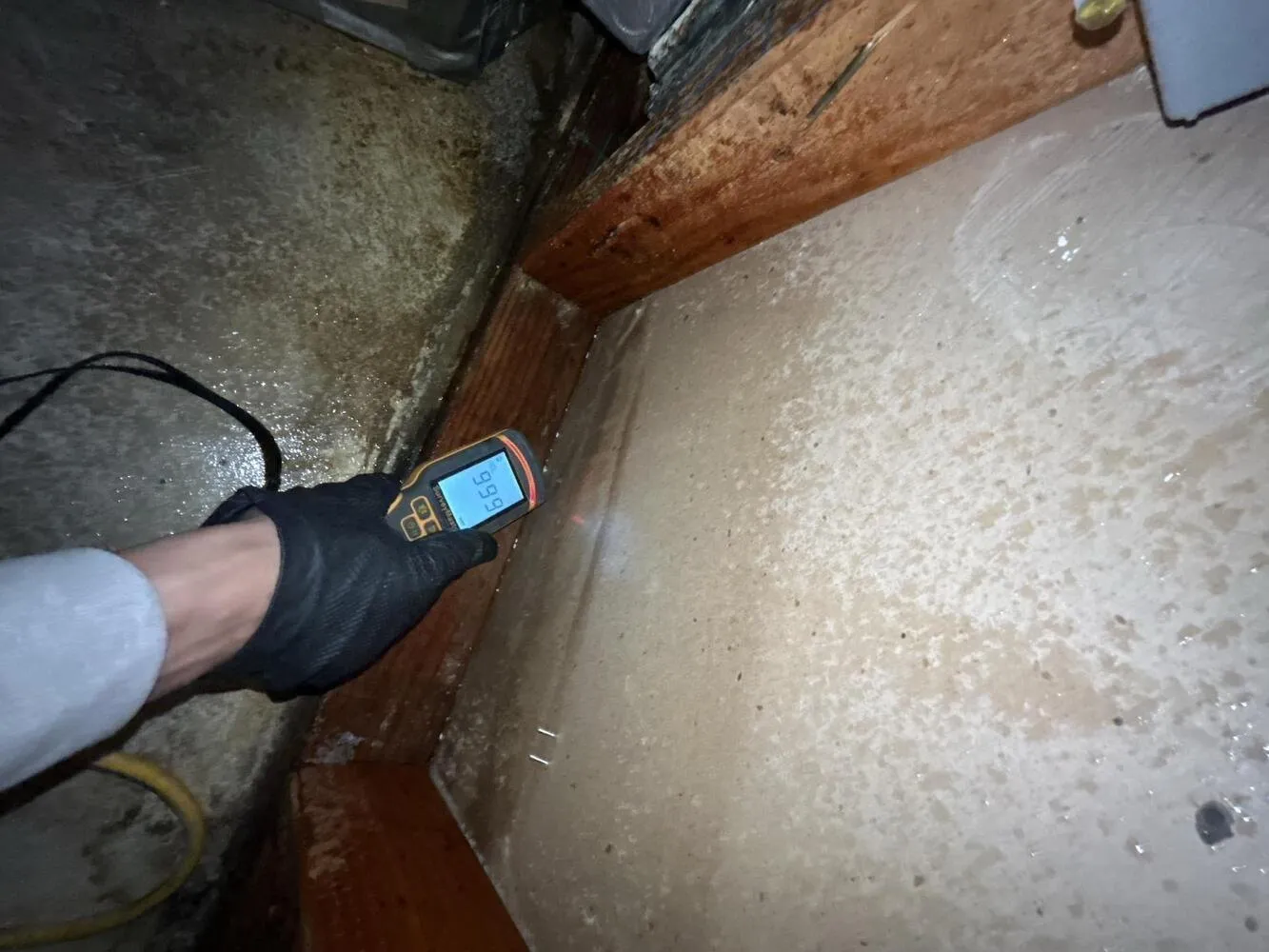
The drying part is ours. We take moisture readings to find hidden water and to guide the drying, and we monitor humidity while the drying runs. Say runoff came in under the front door and soaked the hallway carpet and the bottom of the walls. We would find how far the water spread, then remove the wet carpet and the wet bottom of the drywall. Then we would dry the rest with air movers and dehumidifiers, while air scrubbers and HEPA filtration clean the air. If mold has already started, that part becomes mold remediation.
If you hire anyone, ask about their qualifications, training and experience, and check references. Our technicians’ certifications from the Institute of Inspection, Cleaning and Restoration Certification (IICRC) include water damage restoration and applied structural drying, and our inspections and estimates are free.
The Bottom Line on Monsoon Floods in Las Vegas
In Las Vegas, monsoon flood water arrives as thunderstorm runoff, and it can come from a storm that didn’t pass over your house. Safety comes first: wait for the all-clear, follow step 2 above if you smell gas, and handle the power only from a dry spot. Then photograph the damage before you start cleaning.
Throw away what soaked up a lot of water and can’t be cleaned and dried, plus any food that may have come in contact with flood or storm water. You can do some of the cleanup yourself, but EPA says it can be difficult and dangerous work, and drying usually takes several days to weeks, until the materials are completely dry on the inside.
If the water reached your walls or your flooring, call us at any hour. We’re open 24/7 and on site in under an hour, and the inspection and estimate are free.