What to Do If Your Las Vegas Home Has a Popcorn Ceiling?
October 18, 2026 · 9 min read
On this page
- How Do I Know if My Las Vegas Popcorn Ceiling Has Asbestos?
- Should I Remove, Cover or Leave My Las Vegas Popcorn Ceiling?
- What Should I Do if I Already Scraped a Popcorn Ceiling in Las Vegas?
- Who Should I Call to Test and Remove a Popcorn Ceiling in Las Vegas?
- The Bottom Line on Popcorn Ceilings in Las Vegas
Here’s the short answer for a Las Vegas home with a popcorn ceiling. A ceiling in good shape can stay where it is, as long as nobody scrapes, sands or drills it. A damaged ceiling, or one you want gone, calls for a sample analyzed by a lab before anyone disturbs it. And if you’ve already started scraping, the next steps have their own section below.
That may not be the answer you expected from us, since asbestos abatement in Las Vegas is one of the services we offer. But a popcorn ceiling only has to come out in some cases, and the first step is finding out what’s in it. Below, we walk through how to tell if yours has asbestos, how the options compare, what to do after an accidental scrape and who to call for each part of the job.
How Do I Know if My Las Vegas Popcorn Ceiling Has Asbestos?
Not by looking at it. The EPA’s homeowner page, Protect Your Family from Exposures to Asbestos, says that generally you can’t tell whether a material contains asbestos simply by looking at it, unless it’s labeled.
What you can check is the age of your home. Popcorn texture is sprayed on (you may also hear it called an acoustic or cottage cheese ceiling), and two federal agencies set the dates that matter. The U.S. Consumer Product Safety Commission (CPSC) says asbestos may be present in textured paint and in patching compounds used on wall and ceiling joints, and that their use was banned in 1977. The EPA’s asbestos actions page dates its ban on the remaining uses of spray-applied asbestos surfacing material to 1978, after a 1973 ban that covered fireproofing and insulation.
Here’s why those dates matter in Las Vegas. The U.S. Census Bureau’s 2024 American Community Survey table B25034, Year Structure Built, gives 1-year estimates of when homes were built. Its pre-1980 rows add up to about 1 in 6 housing units in Clark County, and more than 1 in 5 in the City of Las Vegas. The table sorts homes by decade, so 1980 is the closest line it draws to the 1977 and 1978 bans.
For example, say your home went up in the 1970s and the bedrooms still have their original popcorn ceilings. The build year tells you to treat that texture with care. It can’t tell you whether the texture holds asbestos. If you’re not sure of your build year, your purchase paperwork or the original listing may have it. Whatever the year, a sample is the way to answer the question.
What settles it is a lab’s analysis of a sample. The same EPA page says a trained and accredited asbestos professional should take samples for analysis, and that taking samples yourself is not recommended. That’s the catch with a do-it-yourself kit: you’d be the one taking the sample.
You may not need a sample at all. The EPA page also says that if building materials in your home aren’t damaged and won’t be disturbed, testing your home for asbestos isn’t needed. The time to find out is before a project touches the ceiling, or once the ceiling is damaged. Whether a remodel calls for a full asbestos survey is its own question, and we cover it in a separate post.
Should I Remove, Cover or Leave My Las Vegas Popcorn Ceiling?
We’ll take the options in the order the CPSC’s Asbestos in the Home guide weighs them, from leaving the ceiling alone to taking it out. The CPSC guide says the best thing to do with asbestos material in good condition is to leave it alone, and it makes removal the last option to consider in most situations, unless state or local regulations require it. The reason it gives is that removal poses the greatest risk of fiber release.
Two questions decide where your ceiling lands. Is it in good shape, and is anything about to disturb it? A sound ceiling with no project planned fits the first option. A damaged ceiling, or one in the way of a project, puts you in the second or third.
- Leaving it alone. This fits a ceiling in good shape that nothing is about to disturb. For example, say you want to swap a light fixture or hang a ceiling fan, which means drilling into the texture. The CPSC guide says sprayed ceiling material that is loose, crumbly or water-damaged may release fibers, and so will sanding, drilling or scraping it. That makes a fixture swap the time to have the ceiling sampled first.
- Sealing or covering it. Both leave the asbestos in place. Sealing (encapsulation) coats the material or binds its fibers together with a sealant, and covering (enclosure) puts something over or around it, such as new drywall on a ceiling. Hanging that drywall means driving screws through the texture, which is the drilling item 1 warns about. The CPSC guide says sealing should be done only by a professional trained to handle asbestos safely, and rolling paint over the texture yourself isn’t one of the methods it describes.
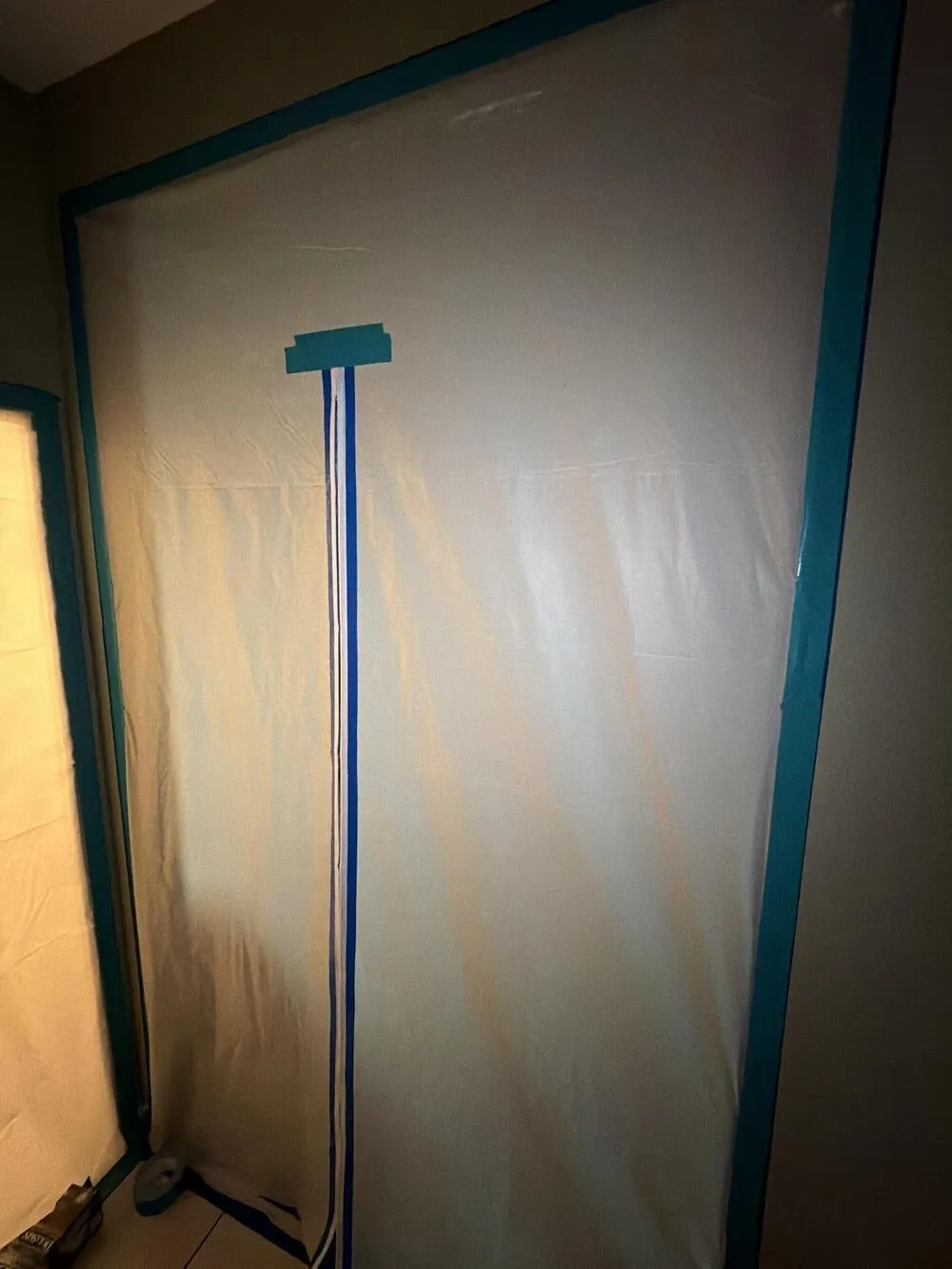
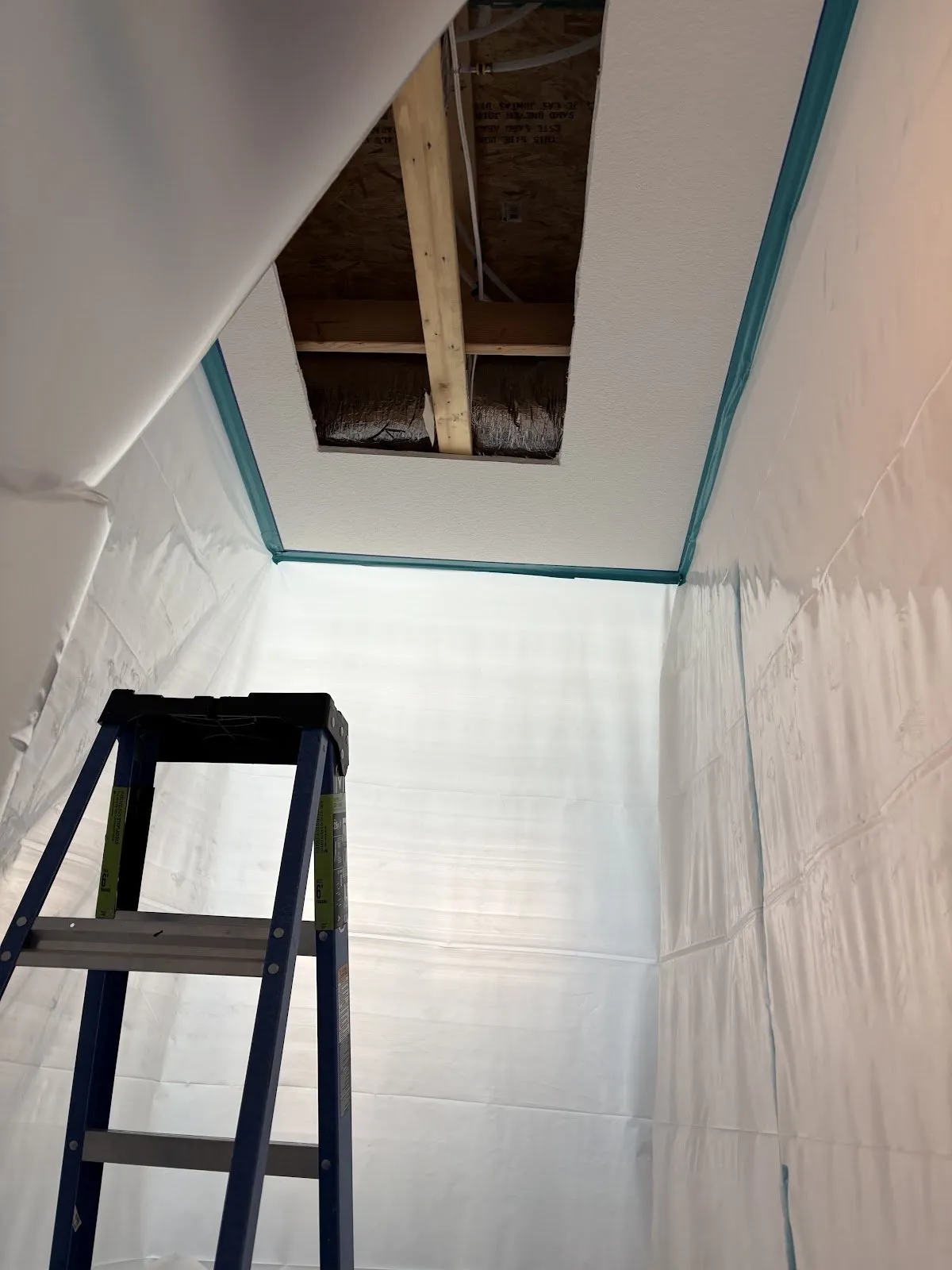
- Removing it. The CPSC guide says removal may be required when a remodel or other major change will disturb the material, and that it must be done only by a contractor with special training. That’s the part we do. We develop a custom asbestos abatement plan for your project. We set up containment around the work area to keep dust and contamination from spreading, and we follow Nevada and federal regulations when we remove and dispose of the asbestos.
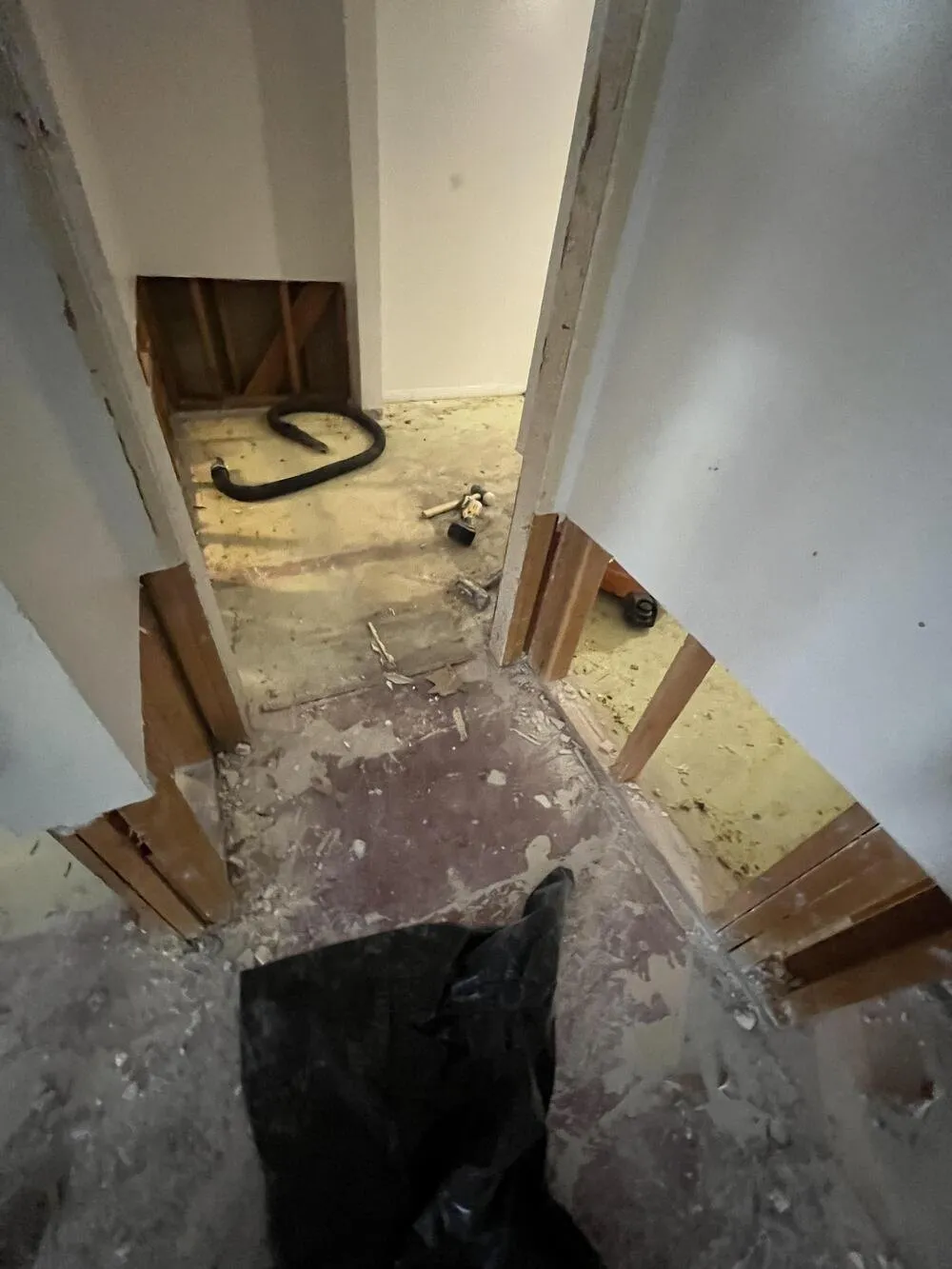
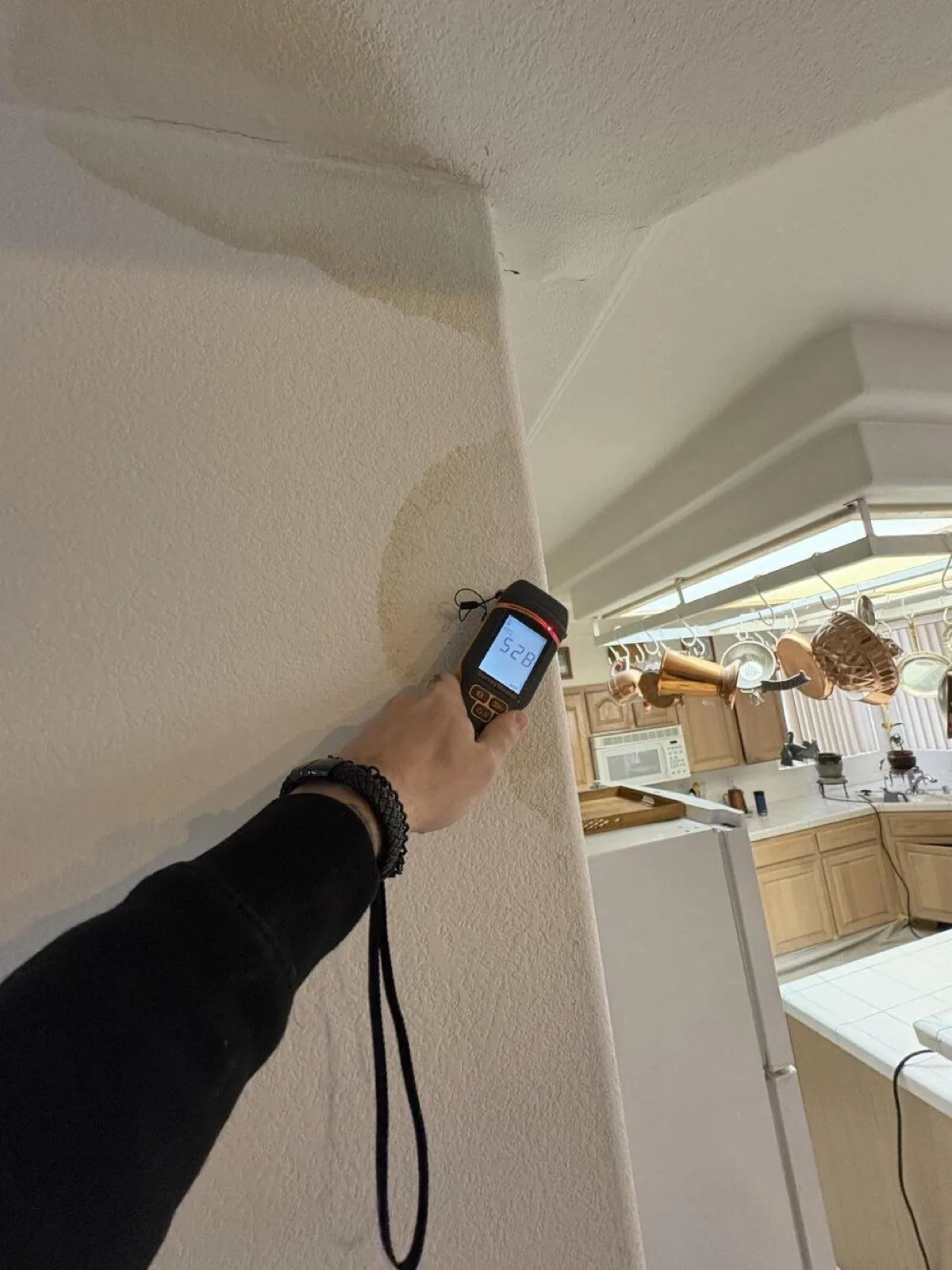
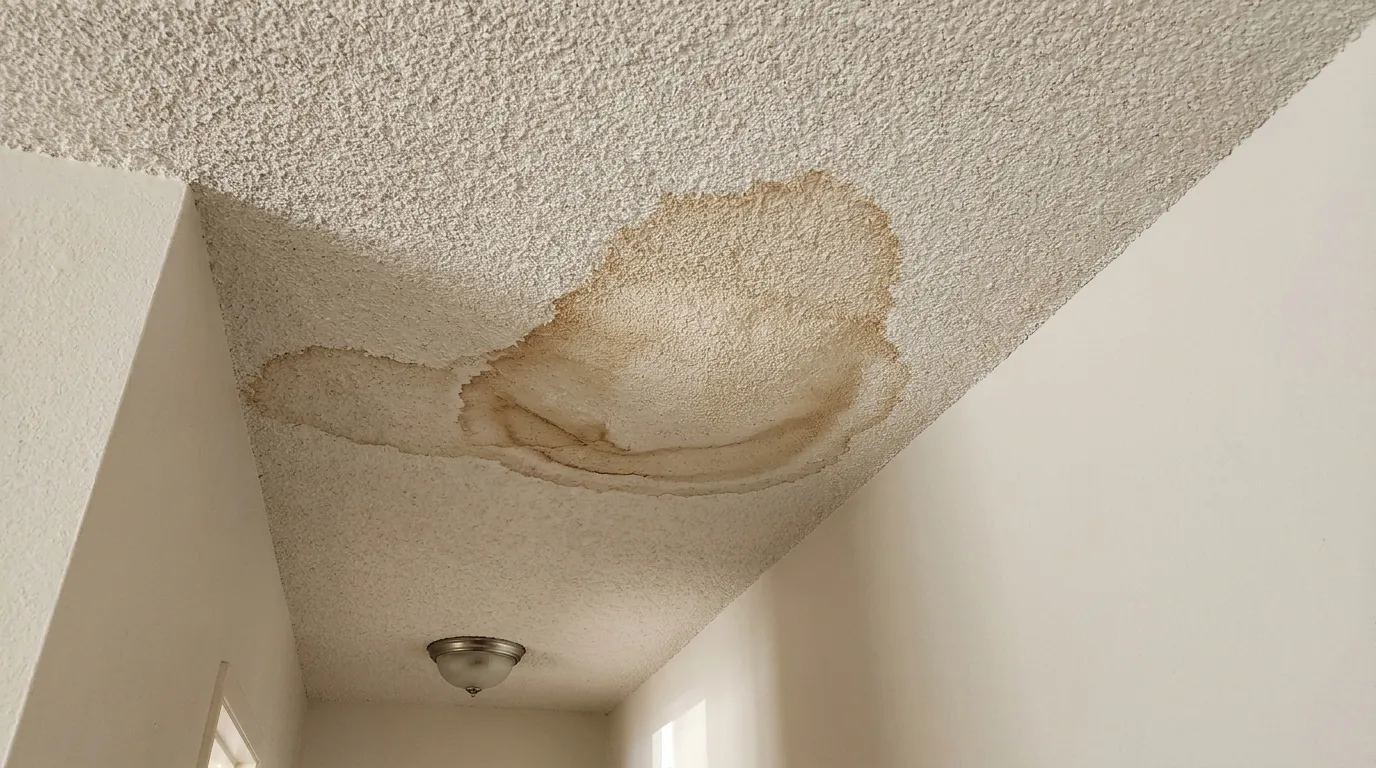
A leak can move a ceiling from the first option to the last. Say a leak from an upstairs bathroom soaks part of a 1970s popcorn ceiling until it stains and sags. Now it’s the water-damaged material from item 1, and if the wet drywall has to come out so the space can dry, a lab result should come first. We handle both sides: through our water damage restoration work, we remove wet materials such as drywall and dry the structure. If a lab confirms asbestos, that section comes out under an abatement plan with containment.
What Should I Do if I Already Scraped a Popcorn Ceiling in Las Vegas?
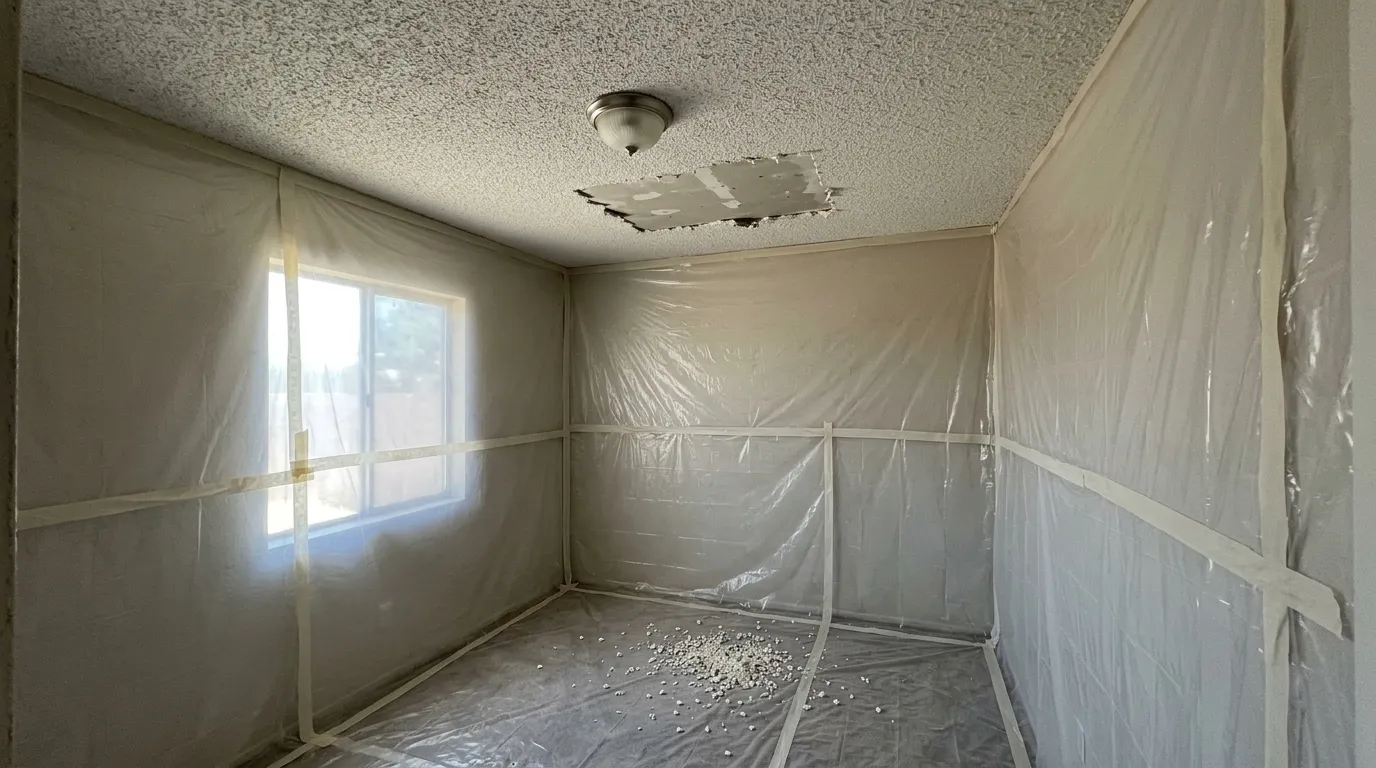
You’re not the first person to find out halfway through. On Reddit’s r/homeowners, one homeowner posted that they had started scraping a popcorn ceiling before realizing it needed to be tested for asbestos. They asked how much trouble they were in. It’s an easy mistake to make, because nothing about the texture warns you. If that’s where you are, the goal now is to keep the debris from being stirred up and carried around the house.
These steps come from the EPA’s asbestos do’s and don’ts for homeowners, on its Protect Your Family page, minus two items about floors that don’t apply to a ceiling.
- Stop scraping, and leave the rest of the ceiling alone. Don’t saw, sand, scrape or drill into material that may contain asbestos, and take every precaution not to damage it further.
- Keep activity in that room to a minimum. That includes limiting children’s access to it.
- Don’t dust, sweep or vacuum the debris.
- Don’t track the debris through the house. If you can’t avoid walking through the area, the EPA’s list says to have it cleaned with a wet mop, but to call an asbestos professional when the material is from a damaged area or a large area must be cleaned. Scraped ceiling debris came from a damaged area, so this cleanup belongs with a professional.
- Leave sampling, sealing and removal to trained professionals.
If you’re worried about what you breathed, the EPA’s Learn About Asbestos page says that, in general, the greater the exposure, the greater the chance of harmful health effects, and it names lung cancer, mesothelioma and asbestosis among the major ones. The page also says symptoms may take many years to develop. That’s a conversation to have with your doctor.
Then the material gets identified. An asbestos inspector can sample what’s left on the ceiling and send it to a lab. If the lab finds asbestos, the scraped room becomes an abatement job, which is where we come in.
Who Should I Call to Test and Remove a Popcorn Ceiling in Las Vegas?
Two different companies, plus a lab. A lab does the testing, not us. The EPA’s homeowner page advises using two different firms, one to assess whether asbestos work is needed and another to do it, so there’s no conflict of interest. Here’s how that splits for a popcorn ceiling in Las Vegas:
- An asbestos inspector looks at the ceiling, takes the sample and explains what the result means for your plans.
- A lab analyzes the sample. Its result, not the year your home was built, answers the question in our first section.
- An asbestos abatement contractor removes the material if it has to come out. That’s us, and it’s the only one of the three jobs we do.
For example, say you want the popcorn off a hallway ceiling ahead of a sale. An inspector you hire samples it, and the lab’s result comes back to you from a firm that won’t be doing the removal. If the result shows asbestos, the removal goes to an abatement contractor. If it doesn’t, you have that answer without anyone selling you the work.
We’re licensed by the Nevada State Contractors Board, license 0091986, and our license carries the board’s Removal of Asbestos classification (A-23). The board’s public license search lists it, so you can check it before hiring us. There’s more about our license, insurance and training on our About page. If a lab has already analyzed a sample, a copy of the lab’s result is worth having handy when you call us. When a ceiling does have to come out, we walk you through a custom asbestos abatement plan step by step. After the asbestos is out, we decontaminate the work area and inspect it. What removal costs depends on the size of the job. Our FAQ page also answers a few more asbestos questions, like whether people can stay in the building during removal.
Before you hire anyone to remove asbestos, ask to see their licenses. That includes an asbestos license from the Nevada Occupational Safety and Health Administration (Nevada OSHA). Nevada’s Safety Consultation and Training Section publishes a summary of Nevada OSHA’s asbestos training and licensing requirements for employers. It lists ceiling acoustic material as a surfacing material whose removal requires licensing by Nevada OSHA.
The Bottom Line on Popcorn Ceilings in Las Vegas
A popcorn ceiling in good shape isn’t an emergency. For asbestos material in good condition, leaving it alone is the CPSC guide’s first choice, and removal is its last option in most situations, unless state or local regulations require it. What decides the rest is what’s in the texture, and a lab result is how you find out, from a sample a trained and accredited professional takes.
The local reason to pay attention is the age of the housing. By the Census figures above, about 1 in 6 housing units in Clark County, and more than 1 in 5 in the City of Las Vegas, were built before 1980. Whatever year your home was built, the texture is best left alone, with a sample before any project that would disturb it or once it’s damaged. If you’ve already scraped some off, the EPA steps above come first.
When the texture has to come out, or a leak has soaked it, call us. We handle asbestos abatement and water damage restoration, and we’re open 24/7.