
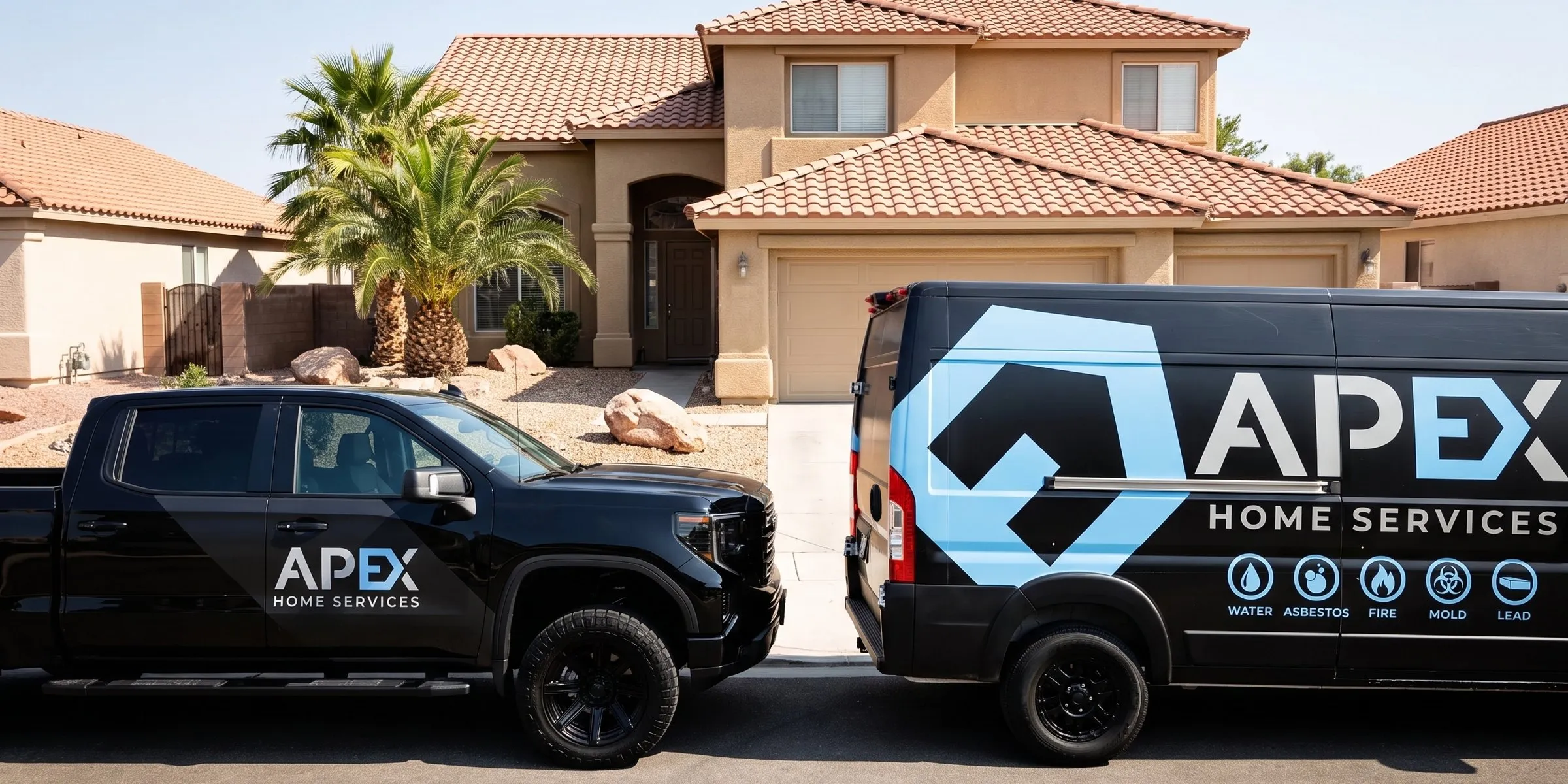
Same-Day Asbestos Abatement in Las Vegas
Need asbestos abatement in Las Vegas? Maybe you're remodeling an older home or tearing out an office interior, and the popcorn ceiling or old floor tile may contain asbestos. We plan the abatement, set up containment and take the asbestos out. The visit and the estimate are free.
Why Us?
- Free inspections and estimates
- We answer 24/7, on site in under an hour
- We work with all insurance companies
 BBB accreditedSince 2025
- 4.9 on GoogleExcellent
 IICRC-certifiedTechnicians
 Licensed in NevadaNV #0091986
 Bonded and insuredNevada
How we handle asbestos abatement in Las Vegas
1We look at the material and your project
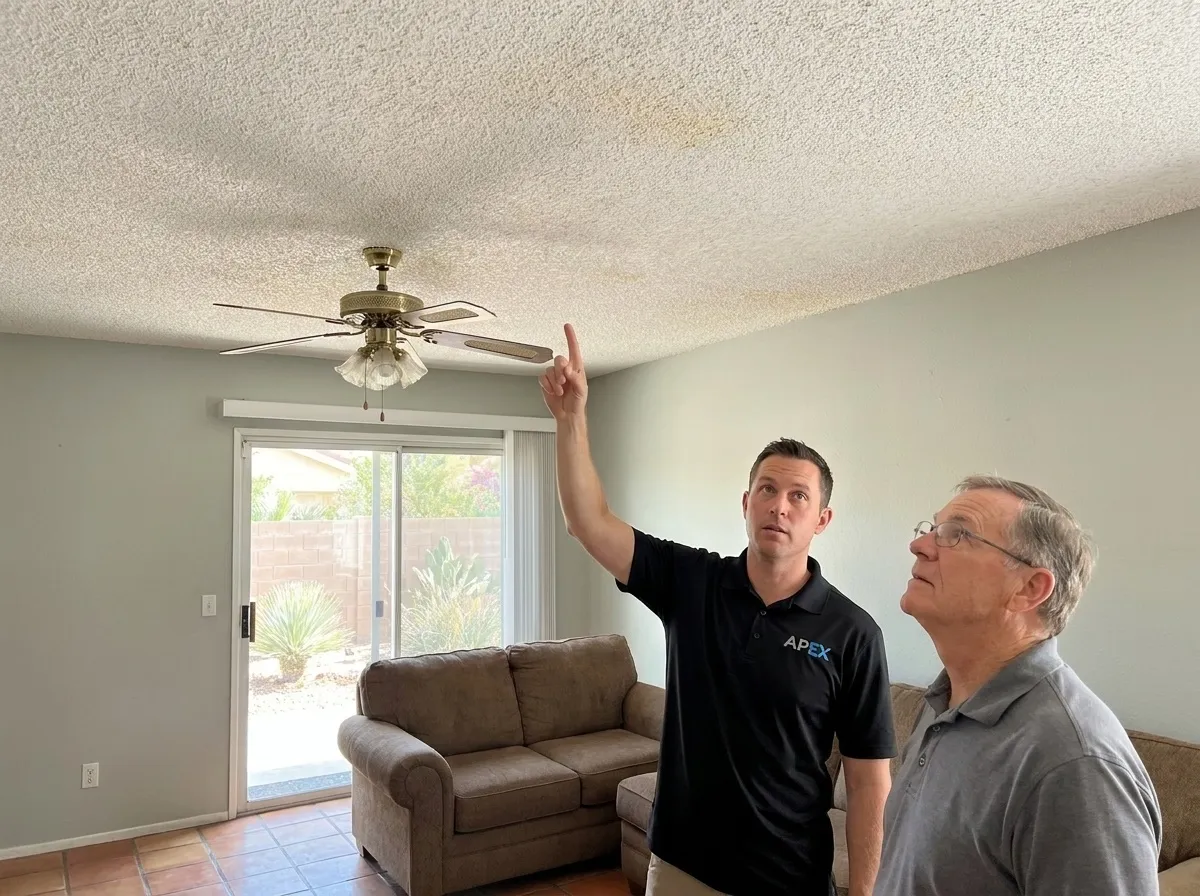
We come out to see the material, the space around it and the project you have in mind. If a lab has tested a sample, keep the report handy for our visit.
2We write a custom abatement plan
We put the plan together around your project, whether that is a renovation, a construction job or a demolition. We go over it with you, step by step, so you know where the work area will be and what is coming out.
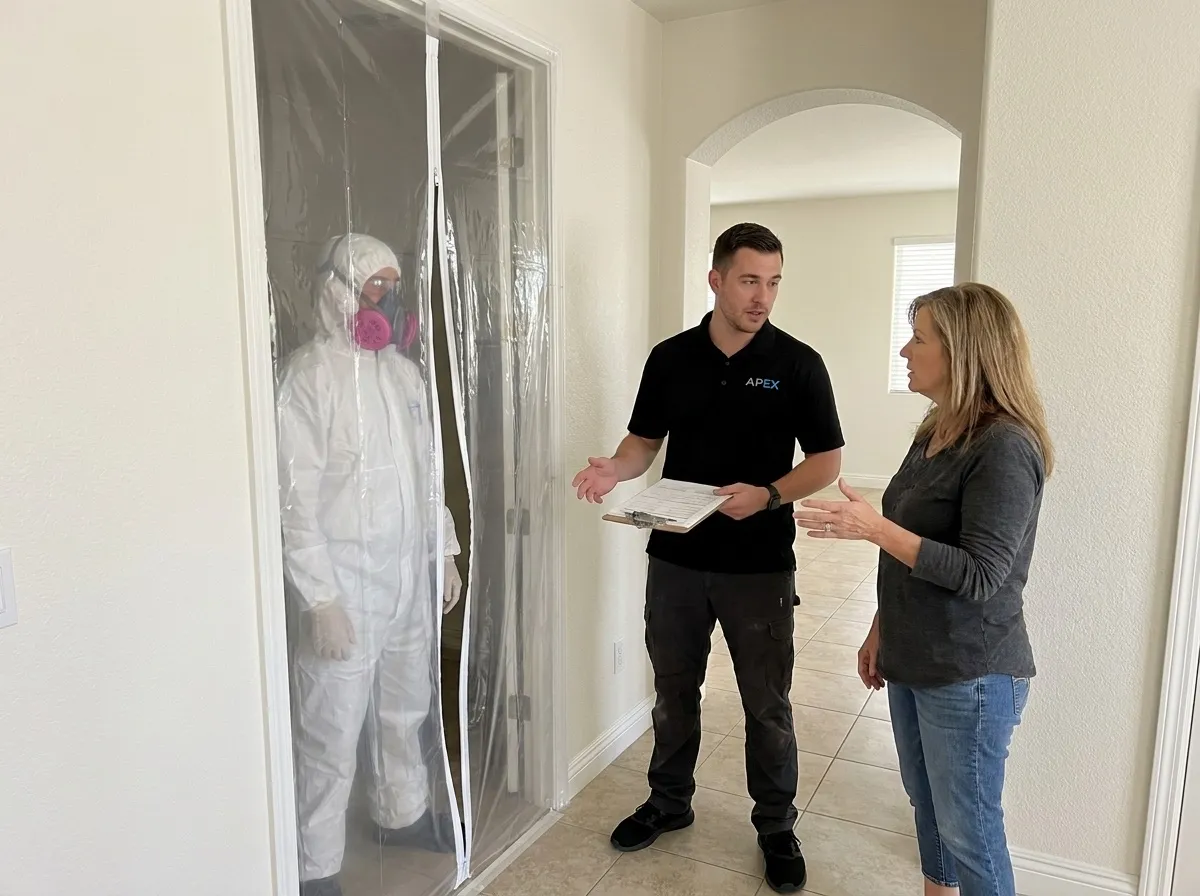
3We contain the area and remove the material
Around the work area, we set up containment to keep dust and fibers from spreading past it. Inside the containment, our crew removes the asbestos material and takes it away for disposal.
4We decontaminate and inspect the area
Once the asbestos material is out, we decontaminate the work area and inspect it. We walk the area with you and go over the work we did.

Gregory Will
6 days ago
“Marcus and Jem we're fantastic and have been very courteous even when my house has not been at its best. I appreciate them as well as their crew for the great hospitality they provided today. They are top star the best and these two left a great impression on me and I appreciate them for being understanding and patient.”
We Work With All Insurance Companies
Whichever company insures your Las Vegas home or business, we work with them on the asbestos abatement and help you with the claim.
- We bill your insurance directly
- Estimates written in Xactimate
- Everything documented
 State Farm
 Allstate
 Farmers
 USAA
USAA Liberty Mutual
 Progressive
 Nationwide
 Travelers
 American Family
 GEICO
GEICOWhat Las Vegas homeowners say about our asbestos abatement
Real Google reviews from homeowners across the valley.
4.9 out of 5,259 reviews on Google
Jaclyn DeSalvo
2 weeks ago
Ed and Jacob were both fantastic. Respectful, informative, and very quick! Apex finished the job much earlier than expected and it was very helpful for us. Highly reccomend them.

gerard olivera
2 weeks ago
Jay and his team showed care and thoroughness in the performance of their job; all three of them were not only very professional but also courteous in dealing with me (Gerard) and my wife. All our pertinent questions in relation to the damage , being currently attended to, were satisfactory answered. If I’m allowed , I’ll rate them and their performance more than five (5) STARS!!!!

Earth67Mars48
3 weeks ago
The team for the water damage showed up promptly, worked efficiently and we're a pleasure to interact with.
Why Las Vegas homeowners call us for asbestos abatement
Licensed for asbestos abatement
Asbestos abatement is part of our Nevada State Contractors Board license, number 0091986. The board's public license search lists it, so you can check it before you hire us. We're bonded and insured as well.
Supervisors with AHERA training
The supervisors who oversee our asbestos work carry AHERA supervisor training, the course for people who run abatement jobs. Our crew works under health and safety guidelines that aim to protect you and the people doing the removal.
Following Nevada and federal rules on removal and disposal
Nevada and federal regulations govern how asbestos is removed and how it is disposed of, and we follow them on our jobs. When we talk through your plan, we explain how those rules shape the work.
Asbestos work in older homes and businesses
We take on asbestos work in houses as well as in offices, stores and other businesses. In an older home, water from a leaking swamp cooler line can collect in the attic and soak through a popcorn ceiling that may hold asbestos. Older commercial buildings can have it in ceiling tiles or pipe insulation.

Valerie Ruelas
a week ago
“Amazing customer service! Extremely knowledgeable, explained in detail all my options. It’s not easy trusting just anyone with your home, but they made my experience a great one! Highly recommend the Apex team!”
Our asbestos abatement team supporting Las Vegas
Our technicians hold IICRC certifications, including water damage restoration, applied structural drying, applied microbial remediation and odor control. Our asbestos supervisors carry AHERA supervisor training.

Nate Birch
CEO
Michael Esplin
Field Lead
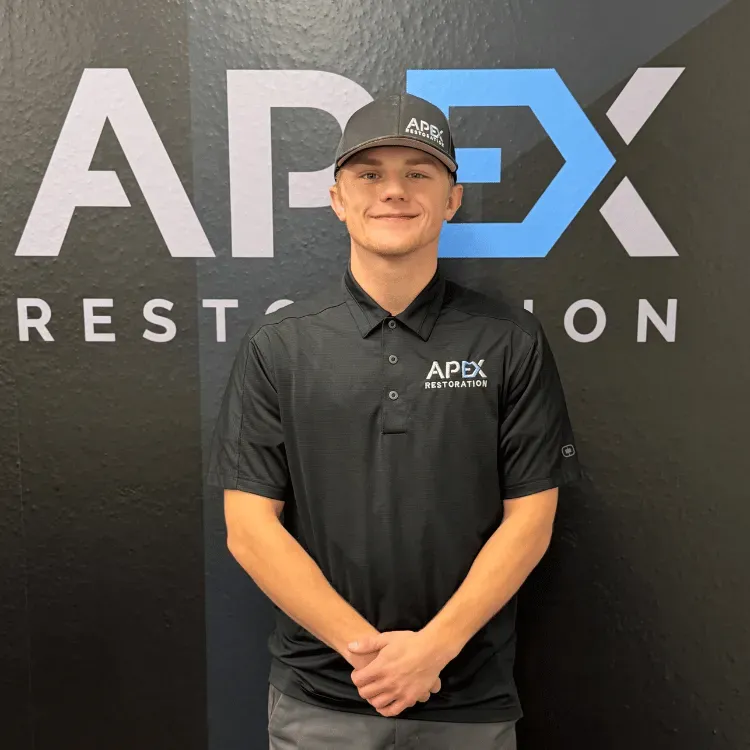
Maxwell Crespi
Crew Leader
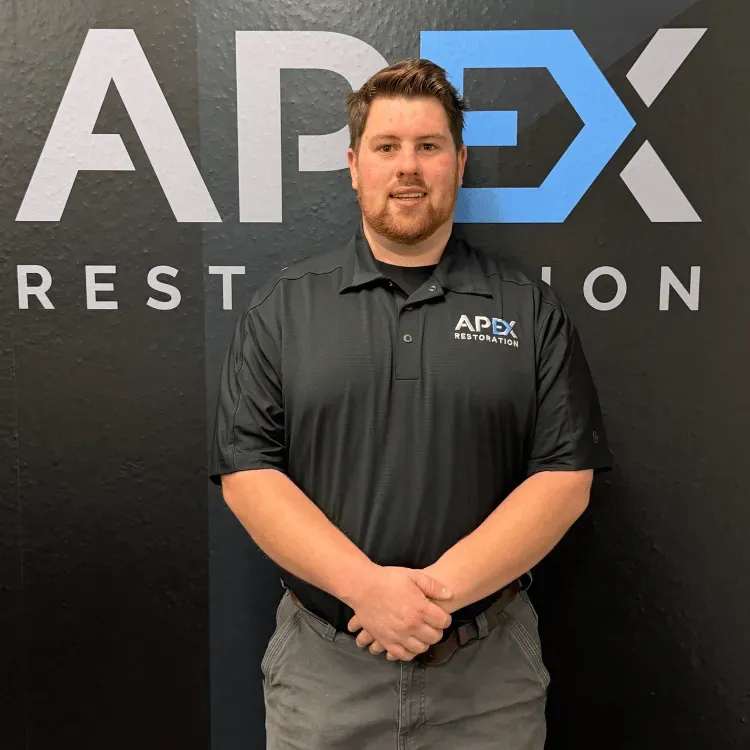
Kyle Transtrum
Lead Technician
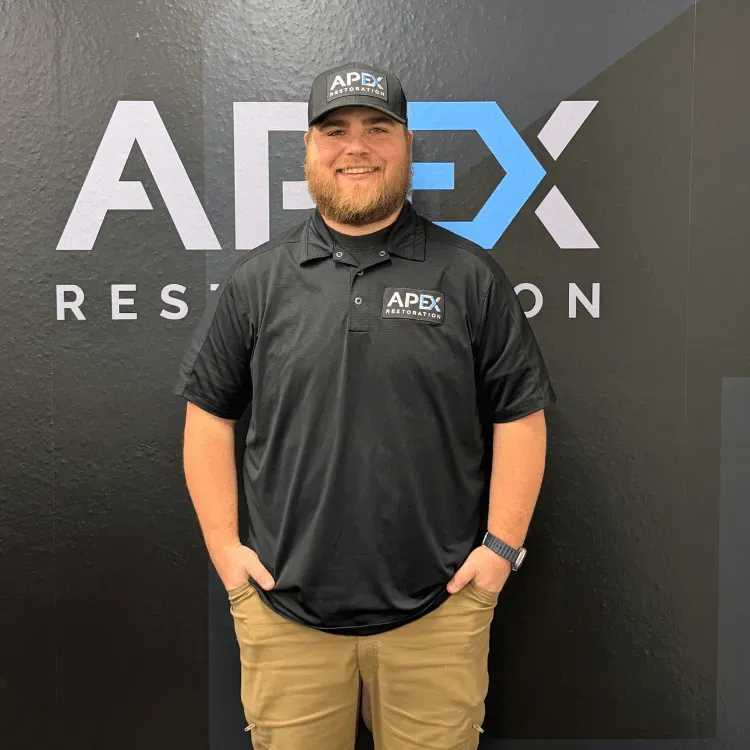
Jordan Duncan
Branch Manager
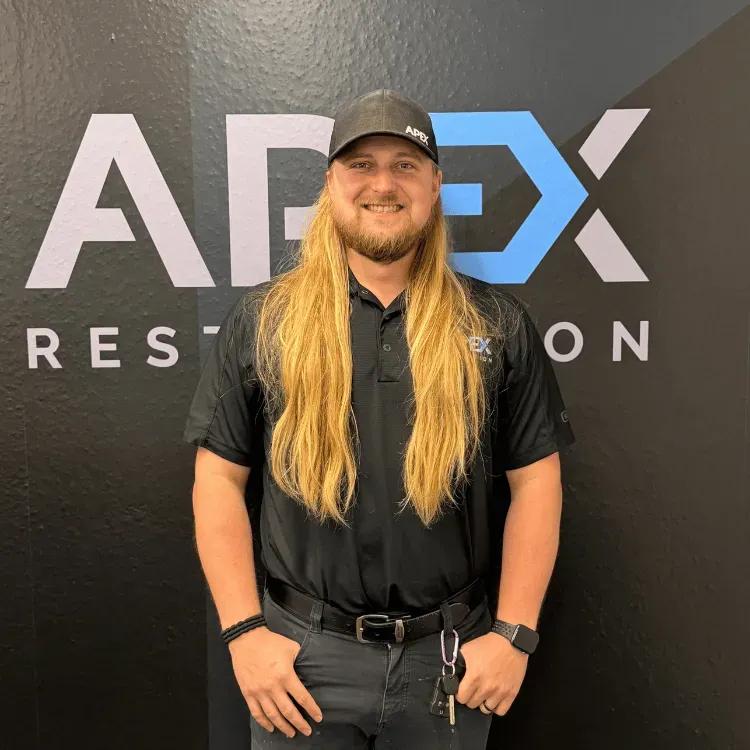
Michael Seifrit
Branch Manager
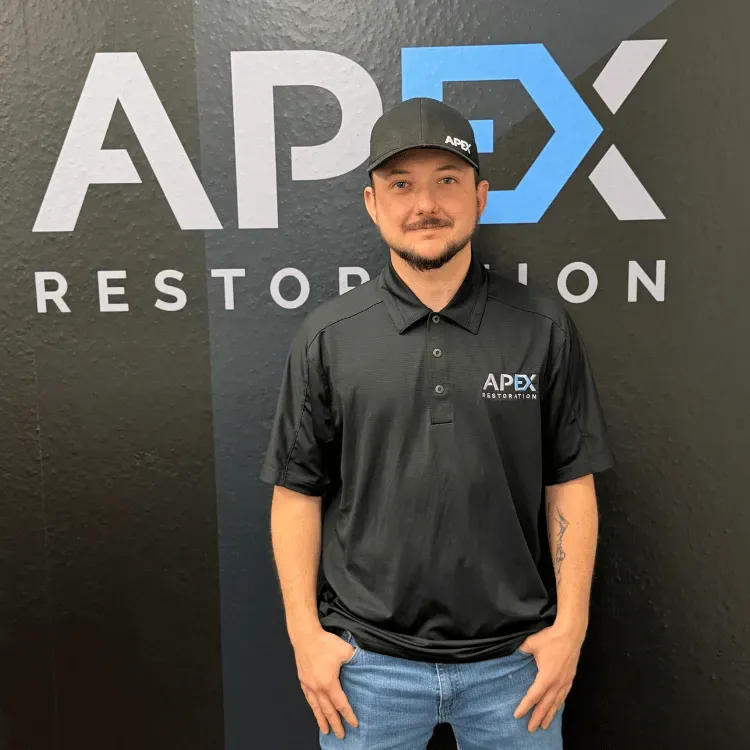
Tyler Tolman
Weekend Supervisor
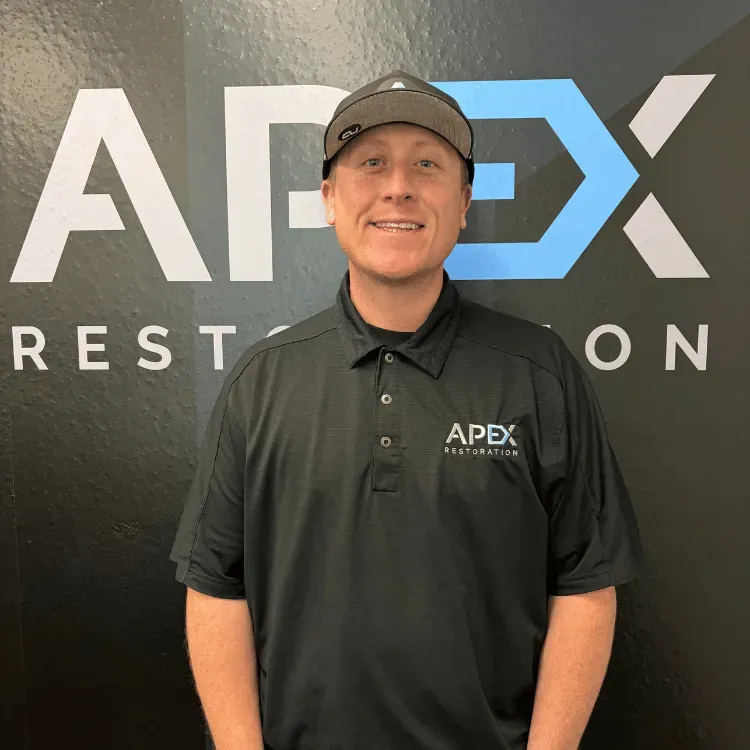
Matthew Shirley
Production Manager
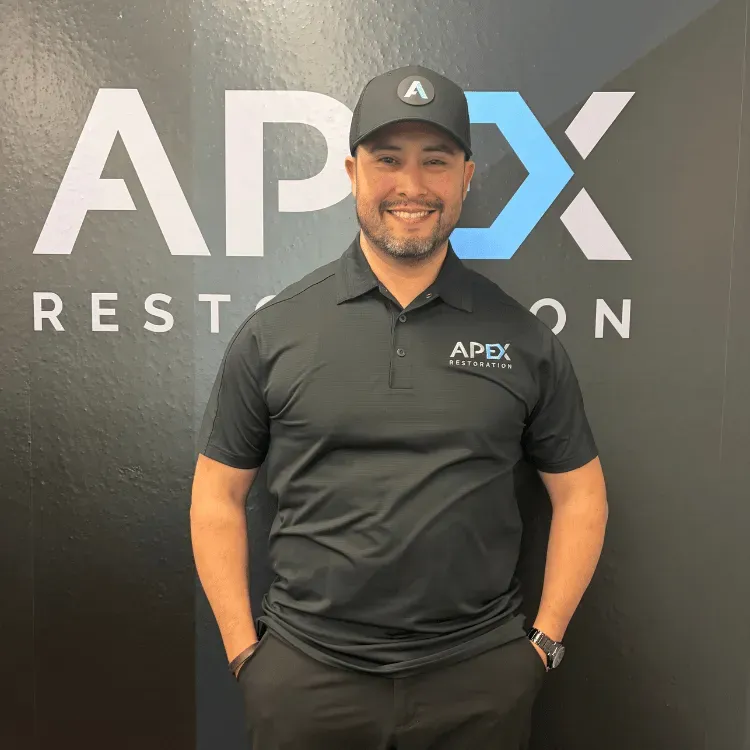
Jesse Trevino
Project Coordinator
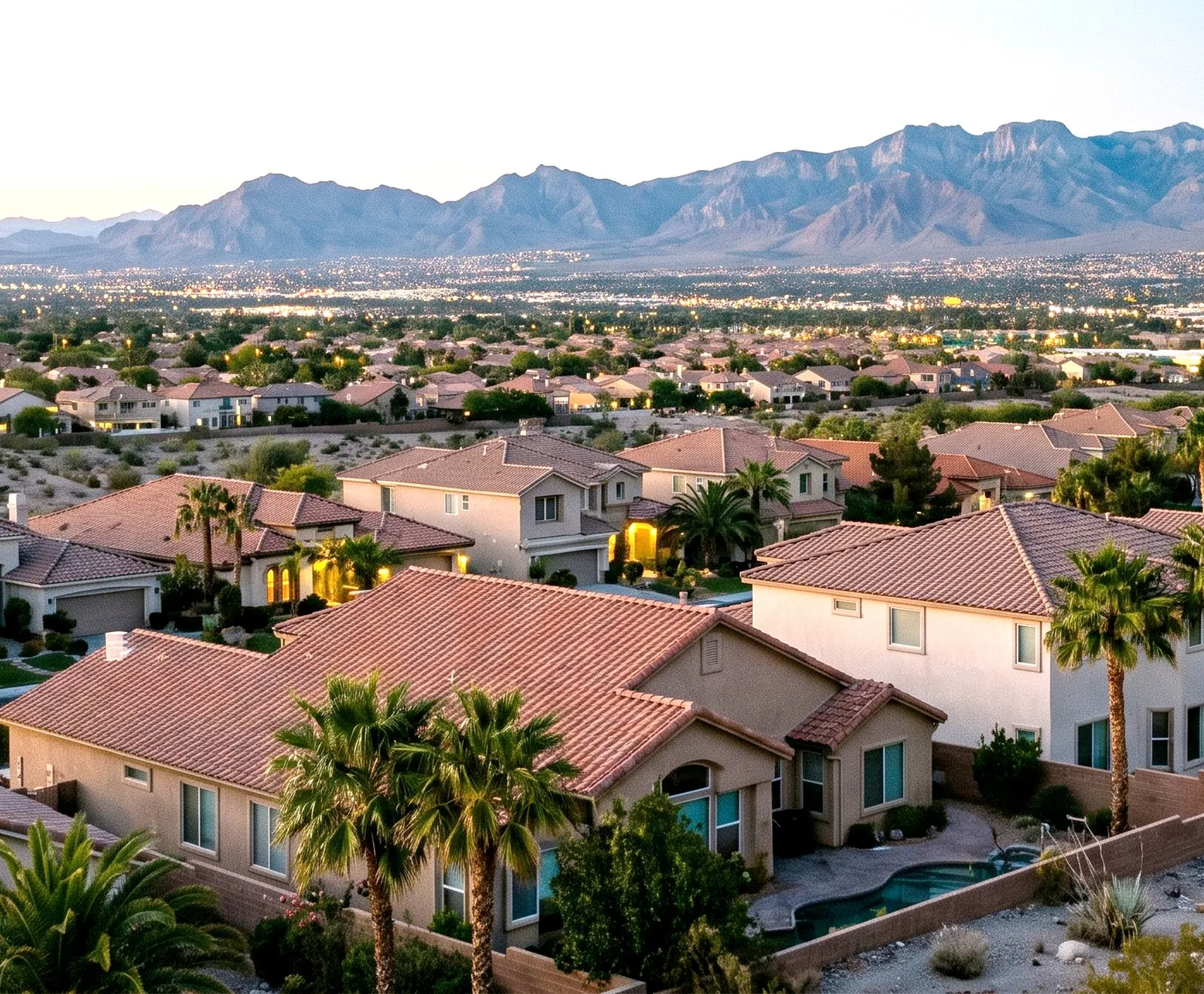
We offer asbestos abatement across Las Vegas
For asbestos abatement, we come to houses and commercial buildings in Henderson, Enterprise and the rest of the Las Vegas valley.
Most homes in the valley are built on a concrete slab, with floor tile often glued to the concrete. In older ones, that tile and the dark adhesive under it may contain asbestos.

Karen L
a week ago
“Every single person on this team that came over during my emergency flood and the following days after were extremely helpful, knowledgable and professional. They were always right on time and thourough in explaining what they were doing at every step and what the next steps would be after. I highly recommend this group, they've done an outstanding job!”
Apex Home Services
Asbestos Abatement Services
- Custom Abatement Plans
- Containment Setup
- Asbestos Removal and Disposal
- Work Area Decontamination
- Post-Removal Inspection
- AHERA-Trained Supervisors
Zip Codes Serviced
89101 • 89102 • 89103 • 89104 • 89106 • 89107 • 89108 • 89109 • 89110 • 89113 • 89115 • 89117 • 89118 • 89119 • 89120 • 89121 • 89122 • 89123 • 89124 • 89128 • 89129 • 89130 • 89131 • 89134 • 89135 • 89138 • 89139 • 89141 • 89142 • 89143 • 89144 • 89145 • 89146 • 89147 • 89148 • 89149 • 89156 • 89158 • 89166 • 89169 • 89178 • 89179 • 89183
Asbestos Abatement in Las Vegas Area
Our Recent Restoration Jobs in Las Vegas
We've done 100s of restoration jobs across Las Vegas.
Get a free asbestos abatement estimate in Las Vegas
Tell us what happened, and we'll come out and look. You pay nothing for the inspection or the estimate.
- On site in under an hourAnywhere in the valley
- Answered 24/7Every day of the year
- Free estimateInspection included
Speak with the Apex Home Services team now
(725) 322-0184
Call for immediate assistance and service.

Common questions about asbestos abatement in Las Vegas
Straight answers to what people ask us before they call.
How can I tell if a material in my home contains asbestos?
Most of the time, you can't tell by looking. A lab test of a sample is what shows whether a material holds asbestos. Until you know, treat it as if it does and leave it in place, with no sanding, drilling, scraping or cutting.
Why does asbestos matter before a remodel or a demolition?
A remodel or demolition cuts, sands and breaks old materials, some of which may contain asbestos. Disturbed material with asbestos in it can release fibers into the air. That is why older materials should be tested before the project starts, and any asbestos found should be handled by a licensed abatement contractor.
What should we do if we've broken into material that may contain asbestos?
Stop the work and keep people and pets out of that area. Turn off any fan or swamp cooler moving air through the room, and don't sweep or vacuum the dust. Then call us, and we'll come look at what was disturbed.
Can people stay in the building while you remove the asbestos?
It depends on the job, and we work it out with you as part of the abatement plan. Keep everyone out of the containment while the crew works inside it. If you have a health question about staying, ask your doctor.
Will my insurance pay for asbestos abatement?
That depends on your policy and on why the work is needed, such as a planned remodel or a leak that damaged the material. Either way, your insurance company decides what your policy covers. We talk with your carrier, whatever company it is.
Have a question? Call us, we're available. (725)-322-0184